
This is the start of a list of book recommendations. I say it’s the start because there are hundreds of books I’d like to recommend, so I’m going to make lots of changes. My intention is to eventually have a core list of my 10 (or so) highest recommendations and a couple of other lists that might change more frequently. This is still under construction, so check back later to see how it evolves.
(If you purchase anything from one of these Amazon links, I’ll earn a tiny commission.)
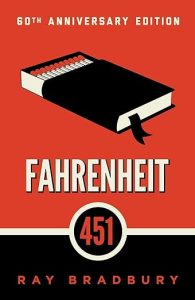 “Fahrenheit 451”
Ray Bradbury
Many people describe “Fahrenheit 451” as a novel about censorship, but that surface-level interpretation misses the real warning Bradbury was trying to give us. This is really a story about what happens when a culture gradually abandons depth, reflection and curiosity in favor of comfort, distraction and endless entertainment. (Does that sound familiar?) Long before social media existed, Bradbury understood how willingly people could surrender their attention — and eventually their ability to think.
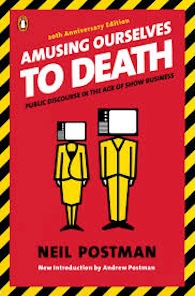 “Amusing Ourselves to Death”
Neil Postman
Neil Postman’s central insight is both simple and unsettling: the form through which information is delivered changes the way people think about reality itself. Written decades before smartphones and social media, this book explains why attempts at serious public discussion so often collapses into entertainment, outrage and distraction today. Few books have done a better job of helping me understand the culture in which we now live. This is the book that convinced me to give up television. (It’s why I don’t own a television today.) If I had had any sense, it would have caused me to run from social media from the very start.
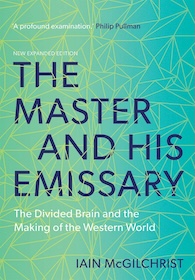 “The Master and His Emissary”
Iain McGilchrist
This is one of the most intellectually ambitious books I’ve ever read. Drawing on neuroscience, philosophy, history and art, McGilchrist argues that modern society increasingly favors a narrow, analytical mode of thinking while neglecting the broader, more humane way in which people experience meaning, beauty and connection. Even when I don’t see things exactly as McGilchrist does, I find his framework extraordinarily useful in understanding modern life. It’s a challenging book to read — at least it was for me — but it’s worth the effort.
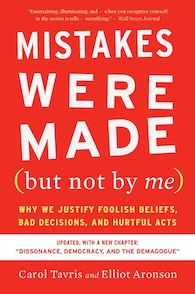 “Mistakes Were Made (But Not by Me)”
Carol Tavris and Elliot Aronson
This book completely changed the way I think about human behavior — especially my own. Tavris and Aronson explore the psychological mechanisms people use to protect themselves from uncomfortable truths and internal contradictions, often without realizing they are doing it. After reading this book, it becomes much harder to view self-deception, public conflict and even everyday arguments in quite the same way again. I read the first edition of this book (when it first came out) and the current edition is the third, but I can’t imagine that it’s been changed enough to modify my opinion about it.
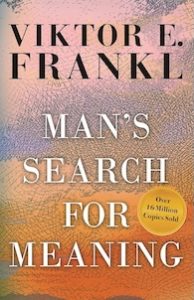 “Man’s Search for Meaning”
Viktor Frankl
Frankl’s experiences surviving Nazi concentration camps led him to a profound conclusion: human beings can endure extraordinary suffering if they believe their lives still possess meaning and purpose. This is a short, accessible book by an insightful psychiatrist. Its lesson tends to stay with its readers for a lifetime. It’s ultimately a reminder that meaning is not something we merely discover. It’s also something we choose.
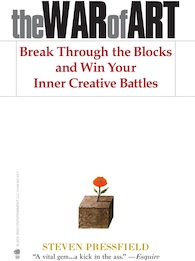 “The War of Art”
Steven Pressfield
Few books capture the strange internal resistance that keeps people from doing meaningful work as effectively as this one. Pressfield argues that procrastination, distraction and self-doubt are not random weaknesses, but powerful forces that oppose creativity and purpose. I revisit this book periodically because it serves as a much-needed reminder to stop hesitating and simply do the work. Every time I read it, I’m forced to confront the fact that I constantly allow myself to become blind to inner patterns — fears, insecurities and more — that should be obvious to me.
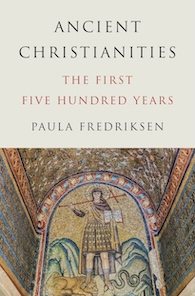 “Ancient Christianities”
Paula Fredriksen
This book challenged some of my long-standing assumptions about how Christianity developed in its earliest centuries, which made it uncomfortable reading at times. Fredriksen is a historian who specializes in the origins of Christianity. She examines the historical complexity of the early Christian movement in ways that forced me to think more seriously about issues that would have been easier to ignore. The story I had always been taught about the origin of the Christian church was pretty simple and straightforward. There’s a lot of value in honestly wrestling with the fact that its actual history is a lot more complicated than that.
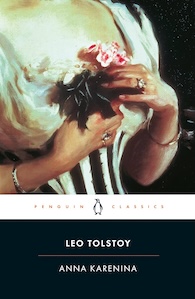 “Anna Karenina”
Leo Tolstoy
Although the novel is best known for the tragic story involving Anna, I’ve always found the parallel storyline involving Levin and Katerina far more compelling. Levin was essentially a thinly disguised version of Tolstoy himself, and through him Tolstoy explored questions involving morality, responsibility, love, faith and the search for meaning in a rapidly changing society. Few novels have given me a deeper appreciation for how values quietly shape human lives and relationships. I didn’t read this novel until about 10 years ago and I really regret waiting so long. As a bonus, the novel teaches a lot about the structure of Russian society when it was still incredibly backwards by western standards.
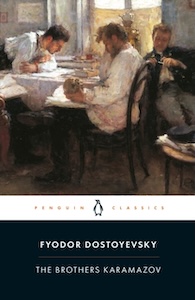 “The Brothers Karamazov”
Fyodor Dostoevsky
This classic of Russian literature is one of the most psychologically and spiritually profound novels I’ve ever read. Through the conflicts within the Karamazov family, Dostoevsky explores questions involving faith, doubt, morality, suffering and personal responsibility with remarkable depth and honesty. The book is filled with philosophical ideas, but what gives those ideas power is the painfully human ways in which the characters struggle to live them out.
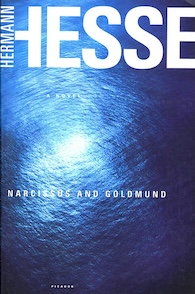 “Narcissus and Goldmund”
Hermann Hesse
This novel by German-Swiss writer explores two radically different ways of moving through life: one centered on discipline, intellect and spiritual order, the other on experience, emotion and artistic passion. What makes the book so compelling to me is that Hesse presents both perspectives sympathetically, making it easy to identify with each character in different ways. By the end, I was left with the sense that most thoughtful people contain elements of both — and that part of becoming whole involves learning how to integrate those seemingly contradictory parts of ourselves.