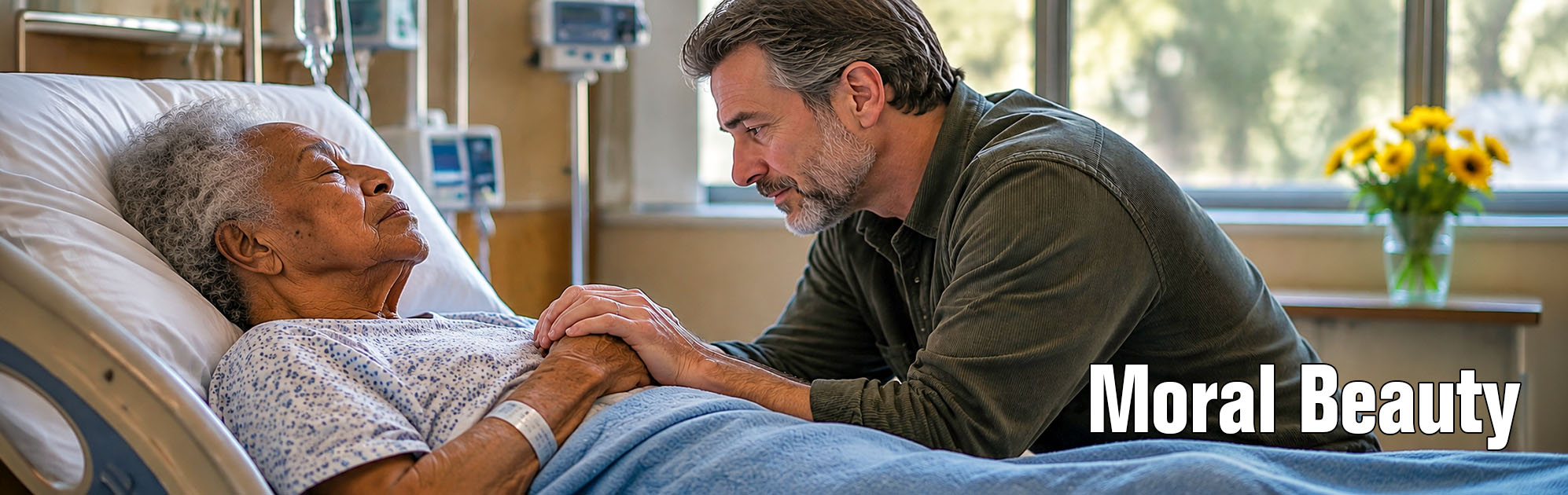
Moral beauty is the beauty we recognize in human goodness. We see it in acts of love, kindness, courage, compassion, honesty, loyalty and self-sacrifice. It’s the kind of beauty that can move us deeply when we encounter it in another person — and sometimes inspire us to become better ourselves.
But moral beauty isn’t simply something to recognize or admire. It’s something we have to choose in the way we live, in our relationships, in how we treat others and in what we’re willing to sacrifice for the things that matter most.
I’ve spent years writing about what’s wrong with our dysfunctional culture. I haven’t changed my mind about those things, but I’m increasingly interested in something more important: how we can choose to live differently, regardless of what the culture around us encourages or rewards.
I don’t have a formula for living a morally beautiful life. I’m still trying to figure out how to make those choices myself. But I believe that choosing what is beautiful and good matters far more than endlessly fighting what’s wrong with the world.
That’s what I mean when I talk about choosing moral beauty in a broken culture.
Further reading
- The Power of Moral Beauty — Jaimie Lusk, Psychology Today
- Moral Beauty — Rhett Diessner, Encyclopedia of Heroism Studies
- Moral Beauty: Significance and Symbolism — Wisdom Library