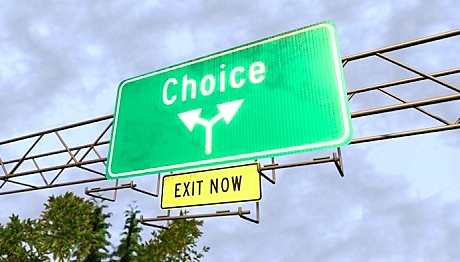
When I was younger, I thought constantly about the things I wanted to accomplish, because we live in a society that’s geared toward achievement. But when I was being encouraged to dream big back then, nobody ever warned me about tradeoffs. Nobody warned me that you give up some things in order to pursue other things. I was under the impression I could have it all.
I’ve thought a lot about choices in the past few years. For a long time, I tried to avoid making choices, because I looked at life as a buffet where you just kept adding to your plate. Maybe my metaphor wasn’t too far off, but I didn’t realize that the “plate” we have in life is of a limited size. If your plate is full, something has to come off as you add more to it.
If you devote yourself to pursuing a dream of some kind — wealth, fame, early retirement, whatever the carrot dangling in front of you is — you always give up something else. Only you can decide which tradeoffs are worth it — and nobody can spare you from the certainty of having to make the choices, whether they’re conscious or unconscious.
As I thought about this Monday night, I was reminded of a quote from investment guru Jim Rogers. In his book, “Investment Biker,” he discussed the tradeoffs involved in pursuing whatever it is you want:
 Black Friday orgy of consumerism makes me very uncomfortable
 FRIDAY FUNNIES
 Collectivists think they’re doing us favors as they force herd to follow
 Taking Donald Trump seriously means ‘Idiocracy’ is already here
 Happy birthday to the monkeys; we’re marking two years today
 16-year-old charged with felony for science experiment gone bad
 Paradox of choice can leave us longing for certainty of the past
 Who were you before someone told you who you were supposed to be?
 Not happy with your life? Change your narrative, change your life