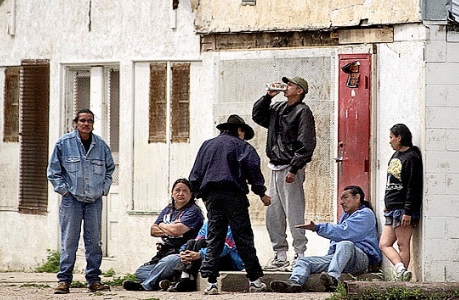
The Oglala Sioux Tribe of South Dakota is suing five big companies that make beer, asking that they cough up half a billion dollars in compensation for the economic, social and health consequences of their products. As far as I’m concerned, it’s just a legal shakedown.
Alcohol is illegal on the tribe’s Pine Ridge Indian Reservation, but that doesn’t mean the Native Americans who live there don’t drink. There’s a tremendous alcohol problem there. So where do the people get their illegal booze? It mostly comes from a few tiny places such as Whiteclay, Neb., a town of 14 people, whose four beer stores sell an average of 11,000 cans of beer each day.
So legal stores are selling a legal product to people who are legally competent to buy it. So why is the tribe suing the beer companies instead of placing the blame on the people who choose to spend their lives this way? The lawsuit says that the stores sell the beer knowing that the purchasers must be intending to smuggle it onto the reservation, but I still can’t figure out how that makes it the stores’ fault — or the beer-makers’ fault.
 UPDATE: Major changes coming to this website in the next few months
 Taking risks, working for big goals can create success, joy, exhilaration
 Blind faith in our ability to reason led to arrogance, false certainty
 No matter what it is you believe, some form of faith is at the root
 Maturity asked me to learn that I’d never win certain arguments
 Lesson from U2: Rejection doesn’t necessarily mean it’s time to give up
 Healthy romance features mutual growth, not just ‘take me as I am’
 Good old fashioned propaganda handed out to kids as education