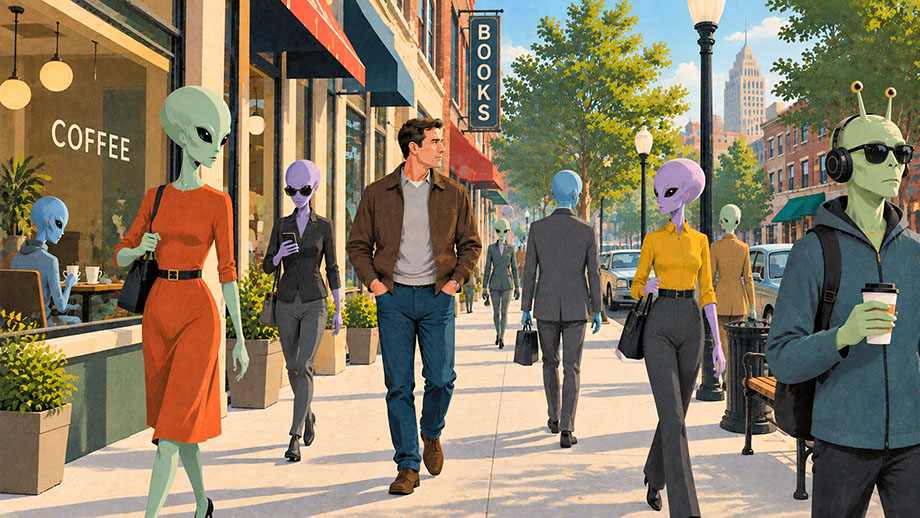
I keep being reminded that I don’t fit in this place.
That thought is always in the back of my mind. I’ve felt it for most of my life. But there are certain days when it seems as though the reminders are everywhere. After another one of those days Thursday, I am feeling incredibly alone tonight.
Again.
Nothing bad happened to me Thursday. Nobody rejected me or insulted me. I didn’t have an argument with anybody. Instead, I had two perfectly friendly conversations with people I’ve known for years, but I walked away from them feeling strangely depressed and isolated.
The specifics of the conversations don’t matter. In fact, explaining them would probably sidetrack what I have to say onto different issues. Neither person said anything shocking or offensive. They both simply expressed perfectly ordinary assumptions about life and the world around us — assumptions which wouldn’t have seemed noteworthy to most people.
But those two conversations jerked me back to reality. They reminded me that I’m the alien here.
 We who believe life has meaning have lost war for modern culture
 Evil media bias? It depends on which lens you’re looking through that day
 Best way to fight terror? Turn off your TV and get back to real life
 Eviction leaves me sifting through collateral damage of a broken life
 Science or bias? What if there’s no proof that eating fat will kill you?
 Ignore the happy face it presents: Coercive state points a gun at you
 Just $12 fed mom and her girls, but bigger challenges lie ahead
 VIDEO: What does it mean to have someone waiting at home for you?
 Pull out of Afghanistan now, before it becomes humiliating as fall of Saigon