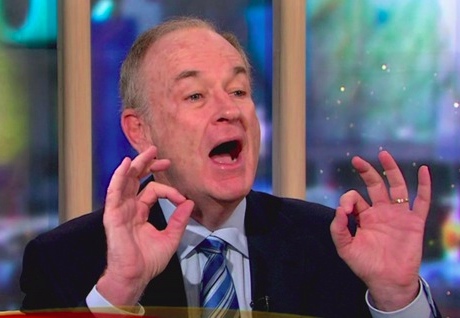
Is anyone else on American television as rude as Bill O’Reilly? I don’t watch TV, so I can’t be sure, but I can’t imagine why anybody watches this rude and pompous guy.
In was in a restaurant last night that was turned to Fox News and O’Reilly’s show was on. Both televisions in the place were on the same channel and it was loud, so I didn’t have much choice but to hear it. I heard O’Reilly start interviewing Dave Silverman, the president of American Atheists. The group is suing to stop some activity or other that it considers an illegal government involvement in a religious holiday. Actually, it wasn’t as much an interview as it was a patronizing attack.
The guest tried to be polite and civil from the beginning, but O’Reilly wasn’t interested. He quickly cut off any polite talk and went on the offensive. He asked the man why his group was suing and the man replied that the atheists believe the case is about government involvement in religion.
O’Reilly asked what religion is involved. The atheist looked a bit puzzled before answering that it’s Christianity. O’Reilly cut him off quickly.
“[Christianity] is not a religion,” he said. “That’s a philosophy.”
I couldn’t tell whether O’Reilly was stupid enough to believe what he was saying or if he knew he was being disingenuous. I have to assume he was being intentionally dishonest, because I can’t believe anyone is that stupid. O’Reilly was rude and intellectually dishonest for the rest of the interview parts that I saw. At one point, he referred to the atheist as “You and your merry band of fascists.”
I eventually had to put my earbuds in and turn Laura Veirs on as loud as I could stand the music.
 Apple podcast listing means you can now subscribe to Love & Hope
 Nature made me like my mother, but my father tried to erase that
 Sex abuse of powerless rampant; denying its serious harm obscene
 What if biggest risk to our lives comes from our own unhappiness?
 How we live our lives can allow us to redeem dark family history
 What would it feel like to be alone and never again be heard?
 Reality no longer seems to matter to dysfunctional culture in denial
 Roy Moore just the latest in the long line of politicians who want control
 Eviction moratorium is pure theft; it’s a sign of creeping socialism