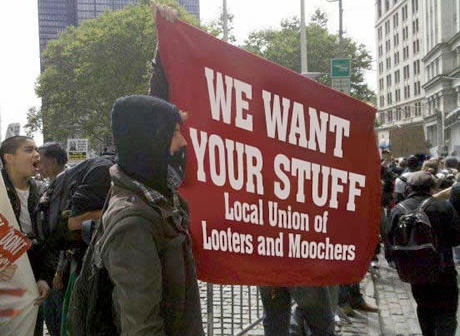
What does “the American Dream” mean to you? When I was growing up, I saw it as the opportunity that everyone had to build a better life for himself. We defined it as having a comfortable, affluent life and a happy family, but it was very definitely an opportunity — a chance to create a Horatio Alger story in real life.
Today, the idea that poor people can raise themselves out of poverty and into middle-class security and comfort through their own work and determination is considered a myth by many, especially those on the progressive left. They believe that those born into poverty can’t do anything about it. They believe that someone has to give something to those people or they’ll never have anything. The people who believe this have spent most of the last hundred years slowly getting that idea into the public consciousness.
Jack Chambless is an economics professor at Valencia College in Orlando. On the first day of class last fall, he asked 180 students to take 10 minutes to write an essay about what the American Dream was to them and what they expected the federal government to do to help them achieve what they wanted. The results were frustrating, but not surprising.
They all pretty much wanted families, good jobs, houses and money to have comfortable lives. There was nothing surprising there. But when it came to what they expected from the government, the vast majority wanted something for nothing. Among the samples Chambless quotes in his article about the experiment:
 Black? White? Brown? Santa Claus is any color you want to make him
 FRIDAY FUNNIES
 THE McELROY ZOO: Like most cats, William is a very curious fellow
 Life needs an ‘owner’s manual’; I’m writing the one I didn’t have
 Best remembrance of fallen fighters? Limit military’s role to actual defense
 UK-based philosopher: Tax money paid to state is actually ‘charity’
 Will better marketing make you love state-controlled medical industry?
 Liberty-minded people need to distance ourselves from crazy folks
 The real crime is how CNN is trying to manipulate what you believe