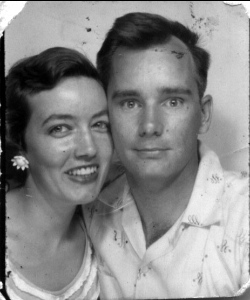
 I decided pretty early in life that I was going to be very different from my parents. It seemed easy at the time to just watch their mistakes and avoid them. So why have I spent so much time over the years hating things about myself that seem to have come straight from them?
Some psychologists would argue that it’s because I learned their habits as I was growing up, so it’s all about the environment. Others might argue that the ways in which I’m like them are simply in my genes (and thus hard to overcome), so it’s all about nature.
I think it’s some of both, as I suspect most people believe today. I think most of us would like to believe we were born as blank slates and that whatever we have is just an accumulation of the “programming” that we got from our parents and whoever else raised us, but I don’t think that’s the case. Economist Bryan Caplan looked at all the studies he could find on the subject and concluded the opposite.
In his recent book, “Selfish Reasons to Have More Kids: Why Being a Great Parent is Less Work and More Fun Than You Think,” he argues that most of what kids are going to become is encoded in their genes. He says that the studies he looked at prove that most of the things parents do to change their kids have little effect. (Here’s an EconTalk podcast in which Caplan discusses the research and his conclusions. I highly recommend it.)
But whatever it is, why have I so often in the past heard things coming out of my mouth — or seen myself acting in certain ways — that seemed to be the ghost of my (still living) father within me?
 Looking at old photos reminds me of success I once took for granted
 In bad times, human nature starts looking for some new scapegoats
 Can’t we all get along? Why is the liberty movement so fragmented?
 Capitol rioters weren’t SS troops, just woeful losers living a fantasy
 THE McELROY ZOO: Meet Dagny, the oddball who’s always hungry
 Fly your freak flag: You’re not going to ruin your kids with ‘crazy’ genes
 What if we’re more talented than our inner fears allow us to admit?
 In England, Oxford City Council mandates video recording for taxis
 Without real human connection, we’re just living in a simulation