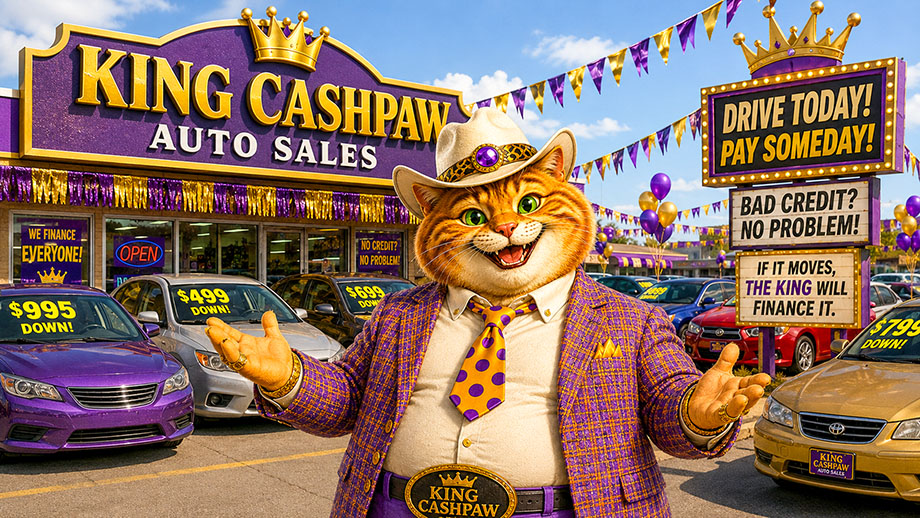
Here’s the latest of my ridiculous parody shorts. It crossed my mind Tuesday to wonder what a slick and fast-talking car dealer might do right now to try to turn the high price of gasoline to his advantage. So I conceived of a fat and lovable character who tried to sell cars that don’t use any fuel — and then I started wondering if it would be funnier if all the characters were felines. Designing the King Cashpaw character took about four hours, but the rest took only another four hours, so this was a relatively quick piece that virtually wrote itself. I know it’s almost impossible for these parody videos to find a larger audience, but at least they amuse me — and there are 19 of them on my YouTube page now. The first few were very limited, but they’re getting more complex.
 Briefly: Political psychologist explains why populists are winning and why democracy will die
 Briefly: Half-naked woman reminds me I want something different from most men
 Briefly: It’s insane to pretend Dr. Seuss and his books are racist
 If you knew when you would die, would that affect how you lived?
 Art and culture are keys to winning the future for individual liberty
 Why do Birmingham taxpayers give $500,000 yearly to college sports?
 Free tires for a stranger? We forget all the people doing good
 Which side should we take in Syria? Let’s just mind our own business
 Primitive instincts: Why do we keep falling in love with politicians?