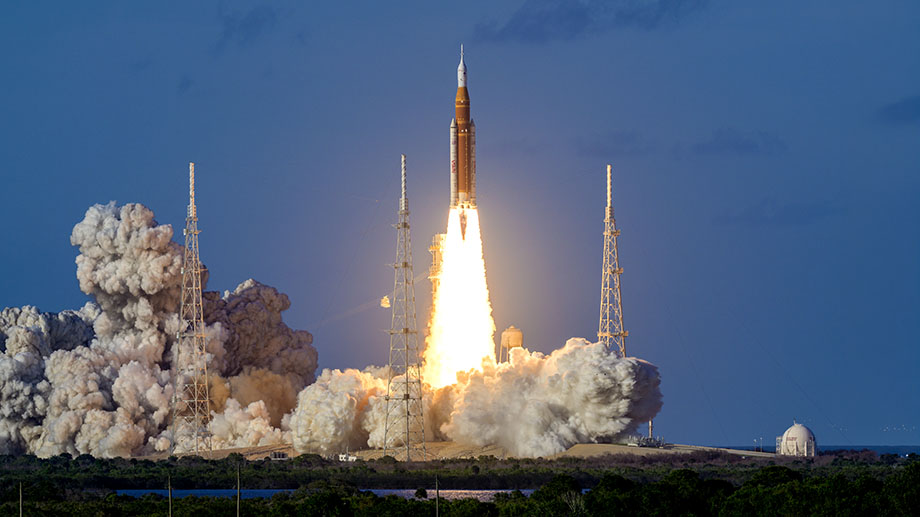
As the minutes and seconds ticked down toward the launch of NASA’s Artemis II mission Wednesday evening, I felt unexpectedly emotional.
I wasn’t sure why I felt like crying. All I knew was that what I was watching was triggering the same sorts of feelings I used to have as a small child watching Apollo rockets launch missions which finally reached the moon.
And then it hit me.
As a child watching humans reach toward space, I was full of optimism about the future. We were breaking free of the confines of this planet. Humans were going to leave their known world — once again — and try to build something new elsewhere.
We were reaching for a new start. We were going to bring Star Trek to life.
And as I watched the countdown to the launch of Artemis II today — with tears in my eyes — I realized why it was so emotional to watch this.
All of my fears and frustrations and anger about our society today faded just slightly. I was emotional to feel just a tiny bit of the optimism and hope that I felt as a child.
Maybe — just maybe — we might still overcome the darkest parts of what we’re doing to ourselves. Maybe we could still overcome all the challenges we face.
Maybe I could feel hope again for the future of humanity.
 Petty politics as usual just might be Chris Christie’s bridge to obscurity
 Hospital’s five-year fight to move shows health care isn’t free market
 Hey, you! If you’re in New Jersey, you help pay for ‘Jersey Shore’
 Feral cats and hurt people both require trust and patience to heal
 Do people change? Or do we just learn how to manage our faults?
 Sick of partisan political conflicts? Join me in taking a 90-day break
 If no mortal can ever be perfect, should we even try to be good?
 If you have a good enough reason, you’ll leave your addiction behind