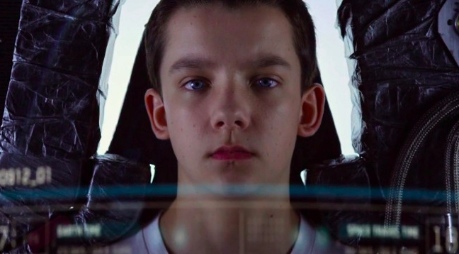
“Ender’s Game” made me cry.
I don’t mean in the sense of openly weeping at the excitement of a hero winning his objective. It made me cry inside — and kept me teary-eyed — out of a sense of deep identification with Ender Wiggin. If you’ve ever been an outsider who wasn’t like the people around him, you might find yourself feeling deep empathy and attachment to the character of Ender.
I’ll start with the bottom line. If you read and loved Orson Scott Card’s novel, “Ender’s Game,” I think you’ll enjoy the movie version that opened in theaters Friday. (The trailer is below.)
The movie can’t go anywhere nearly as deep as the book did in creating attachment with the character, but if you already love the book — and couldn’t read it without feeling that parts of Ender’s story reminded you of your own story — the movie will probably evoke enough of what you felt in the book to be an enjoyable and emotional experience.
If you haven’t read the book, the movie isn’t going to be the same experience. Most of what’s important in the book takes place in Ender’s head. In the book, we get to know him. We experience his feelings. We identify with him. We become him. The movie can’t do that. (In an interview with Wired magazine this week, Card admitted that the book was unadaptable as he wrote it.)
 Why are killing, maiming people elsewhere called moral, ‘legal’?
 Ron Paul asks 31 tough questions that our politicians won’t answer
 We hate ourselves for needing other people’s approval so much
 We can’t trade away gun rights and believe it’ll give kids perfect safety
 Check out my Tuesday interview on Steve Gelder’s political radio show
 Can’t we all get along? Why is the liberty movement so fragmented?
 How one woman’s grand gesture for love turned into a nightmare
 Trust and spontaneous order don’t require heavy hand of the state
 Past feels like blurry watercolor, not like the history of real people