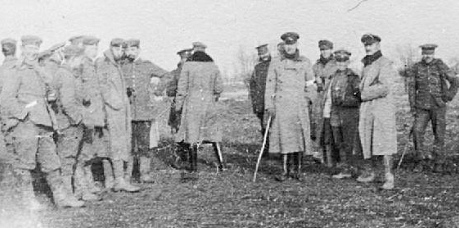
A curious thing happened in Europe 97 years ago this week. Men who had been trying to kill each other suddenly stopped shooting. They started singing together, exchanging Christmas greetings and giving one another presents. But when the authorities from their respective governments got involved, they had to give it up. They were forced to go back to killing each other.
Human societies spend a lot of time and effort to keep a tiny minority of people from hurting and killing each other. Governments have elaborate systems of police and courts to protect most people — who just want to be left alone — from that tiny minority. But when politicians get angry with each other across borders, they expect something quite absurd. They expect people who want to live in peace to suddenly hate other people enough to kill them. The desire for peace is a hard thing for the politicians to get out of stubborn humans.
The narrative we normally hear is just the opposite — that humans are so violent and so war-like that society would be nothing but chaos and killing without benevolent governments agreeing to control things. But the evidence suggests that the story is far more complex than that.
The Christmas truce of 1914 was very unofficial. It wasn’t observed in all places. But in the midst of the slaughter of World War I — seen as the Great War to end all wars at the time — British, German and French soldiers spontaneously made temporary peace with one another. They came out of their trenches and socialized. Obviously, the didn’t hate one another.
 AUDIO: Finding meaning, true self requires rejection of your culture
 Missing childhood connections leave us longing for missing love
 We often don’t see who loves us until it’s too late to be an option
 If you want life outside of hatred, get away from political cesspool
 Beth’s husband loves alcohol more than he loves her, so he left her
 Romantic interest no easier now than it was for me in sixth grade
 As you grow, learn to let go of things that no longer serve you
 ‘Can you trust this administration?’ No, but I don’t trust any president
 Meet the website developer who saved my failing redesign process