Are you a subject, a citizen or a sovereign? Your answer to that question says a lot about who you think owns you, at least in the earthly sense.
There’s been a lot of talk lately about Eduardo Saverin giving up U.S. citizenship as Facebook goes public. He’s one of the founders of Facebook, so he’s becoming incredibly wealthy because of Facebook’s initial public offering. By living in Singapore and giving up his U.S. citizenship, Saverin is going to save millions of dollars now and save his heirs possibly billions of dollars by avoiding U.S. estate taxes later.
Saverin told the New York Times, though, that his move isn’t about saving money.
“This had nothing to do with taxes,” Saverin told the Times. “I was born in Brazil, I was an American citizen for about 10 years. I thought of myself as a global citizen.”
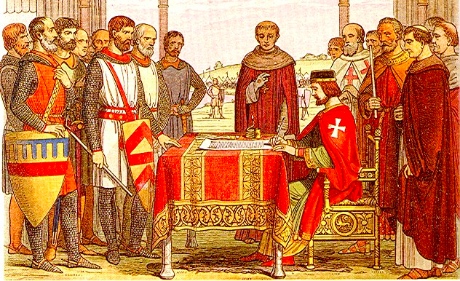
In 1215, King John of England signed what came to be called the Magna Carta. (The full name in English was “The Great Charter of the Liberties of England, and of the Liberties of the Forest.”) The English lords accepted that they were subject to the king, but they tried — sometimes unsuccessfully — to get kings to limit their absolute power over them.
 Why are we uncomfortable when other people aren’t much like us?
 Once you’ve found the right love, build your whole world around her
 Lesson for McCain’s ’08 voters: The lesser of two evils is still evil
 When we sell church like soap, we’re doing something wrong
 The Alien Observer:
 Maturity asked me to learn that I’d never win certain arguments
 I still feel shame for wanting to pursue the desires of my heart
 Murdered family cat in Arkansas is latest victim of partisan political hate
 Emotions such as fear, anger cause distraction, make focus difficult