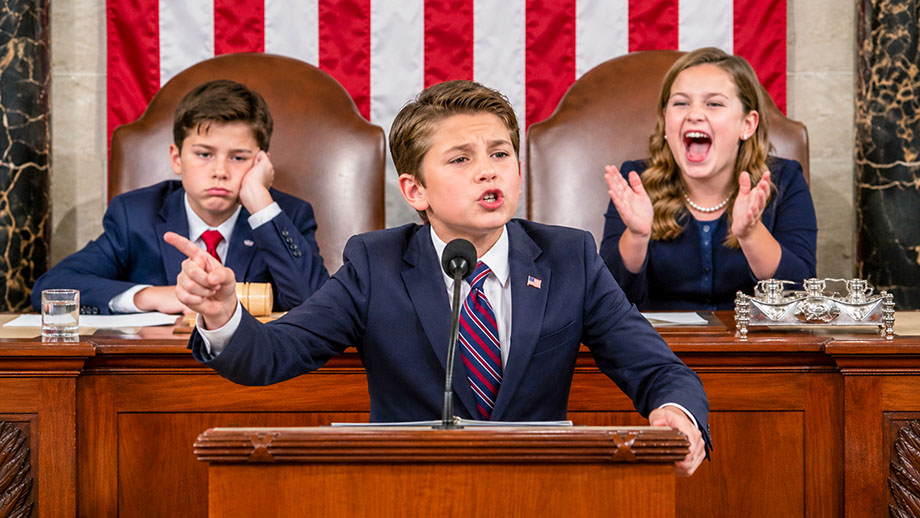
I’m trapped in a society where all the important public figures are middle schoolers.
Not actual middle schoolers, of course. Many of the loudest and most influential voices in our culture are wealthy executives, media personalities, political leaders and adults with millions of followers. But the most popular and prominent of them behave with the emotional maturity of a 12-year-old trying to dominate a cafeteria conversation.
Every disagreement becomes a playground fight. Every issue becomes tribal. Every insult demands retaliation. Every thought must be expressed immediately. Every opinion must be performed publicly. Every emotional reaction becomes content.
And the louder, more impulsive and more outrageous someone behaves, the more visibility that person receives.
That’s not happening by accident.
Years ago, media critic Neil Postman warned that television was transforming public life into entertainment. (Read Postman’s “Amusing Ourselves to Death.” Please.) Television rewarded personalities more than ideas. It rewarded emotional immediacy more than thoughtful reflection. Politics, journalism, education and religion all slowly began adapting themselves to the demands of a medium built primarily for amusement.
But television now seems almost quaint — and downright intellectual — compared to what came afterward.
Social media didn’t merely continue those trends. It automated and intensified them.
 Donald Trump is no conservative; he’s an immoral, narcissistic liar
 Shock merger: Democrats, GOP to join in creating new ‘super party’
 FRIDAY FUNNIES
 Night of panic and little sleep shows chaos of finding my way
 Fallen world keeps bruising me, but I still believe love will win
 Proving the obvious: Study shows civilian war deaths create enemies
 What makes good science fiction? Aya Katz and I discuss ‘Podkayne’
 500 years after Luther’s 95 theses, there’s still not much to celebrate
 Right of secession? In a sane world, we could talk about it in 2011 without talk of slavery