Who gets to decide what risks you’re allowed to take on your own property? Is it legitimate for police to make that call? Or is it your life and your right to risk it if you want to protect your home?
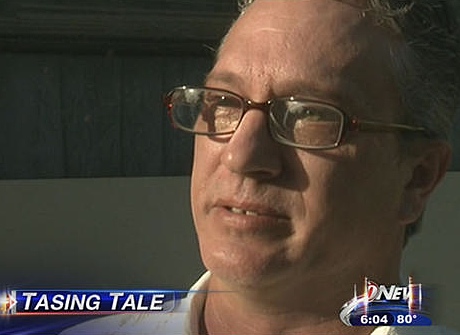
In Florida, a 42-year-old man realized that his neighbor’s house was on fire. It had apparently started as a kitchen grease fire, but the fire had spread. Before firefighters arrived, Daniel Jensen grabbed a hose and started spraying water on the fence between his house and the burning house and on a corner of his roof. At one point, he was afraid his house was in danger and he wasn’t sure whether his daughter was out of the house, so he was spraying water around her window.
All of this seems pretty reasonable to me, but I haven’t had police training that tells me I’m always in charge and my orders must be obeyed.
Police pulled him back from the area of the fire. Then when Jensen again saw flames getting closer to his house — and with firefighters still not on the scene — he grabbed the hose again and started spraying.
At the direction of a sergeant on the scene, an officer then used a taser to knock Jensen down into the puddle of water he was standing in.
 Who is God? What is real truth? All I know is my own experience
 $22,600 for a library router for four users? No wonder states are broke
 Jobs created or saved by ARRA stimulus? Much of it was pure fiction
 NTSB demands states ban all phone use for drivers, even hands-free
 Anonymous ‘Santas’ secretly paying for families’ Christmas layaways
 If you allow anything to be priority over love and beauty, you’re a fool
 Why do I suffer deep alienation when I fear I’m misunderstood?
 Illegal business: City ‘protects’ public from popular ‘juke joint’
 Outer storms will end, but storms in my heart do lasting damage