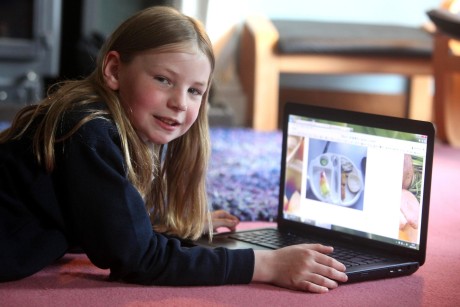
Nobody really noticed when a 9-year-old girl in Scotland started blogging in April about her school lunches. A couple of months later, she’s forced changes in her school’s lunch, embarrassed her local government and made the local politicians look like fools. It’s not a bad start.
Martha Payne had a simple idea. She wanted to take a picture of her school lunch each day and evaluate it, based on how she liked it and how healthy she thought it was. So NeverSeconds was born. Her mother is a physician and her father is a farmer, so it’s natural for her to think about food and health, because she’s grown up hearing about both.
As people started hearing about her blog and reading about it, school officials took notice. They even made some changes. By May 18, the school was allowing students to get unlimited salads, fruit and bread, which had always been the policy, but nobody had ever told the lunchroom workers.
So things were going well for Martha, who was posting anonymously as “Veg.” She was having a great time writing about her lunches. She was receiving pictures of other kids’ lunches from around the world. She had even started raising money to build a kitchen for a school in India. Then newspapers in Great Britain started writing about her project, pointing to the deficiencies of the food. That’s when the problems started.
 I’m struggling to bridge the gap between my need and my reality
 How did memory get it wrong? Why did I edit truth about her?
 Check out my re-runs if you’d like, because I’m on vacation for a bit
 For me, money always comes best when I’m pursuing higher purpose
 Childhood programming trains us to wait for authority’s permission
 Not satire this time: In New Zealand, one model cries discrimination
 Before you can rescue other folks, you have to learn to save yourself
 Political systems built on coercion will always produce cheats, liars
 What is this old longing for home? It’s the need for unconditional love