 When I added the donation button last week to allow people to contribute toward buying more bananas for the monkeys, little did I know how literally some people would take it.
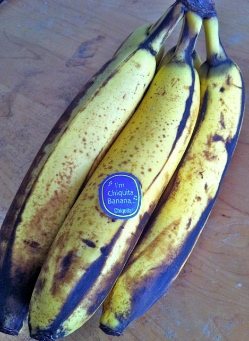
Not only have cash donations through PayPal come in, but one smart — or smart aleck — fan of the monkeys sent this donation through the mail. Despite the trip of about 800 miles, this bunch of bananas arrived in pretty good shape.
Just after the picture was taken, the bananas were split up and eaten by hungry monkeys, who would be happy to swear that I never feed them. So they would like to thank their anonymous benefactor for keeping them alive another day. If this person wants to “out” himself as the one behind this act of charity in the comments, he’s welcome to do so.
In the meantime, the monkeys will be scouring the web for Tuesday’s news.
 It’s hard to ‘get over it’ if pain of abuse turns to rage against self
 Suicide ends pain of depression, but scars loved ones left behind
 Proposals to skip rent payments are rooted in magical thinking
 Surreal dream wakes, shakes me; which is reality, which is dream?
 NOTEBOOK: Simplistic storytelling on TV news pushing nation to war
 ‘Post-racial’ America? We’re nowhere close to that — and may never be
 What would it feel like to be alone and never again be heard?
 Stop spreading lies: Truth, fairness and integrity still ought to matter
 I’m losing need to explain myself to those who misunderstand me