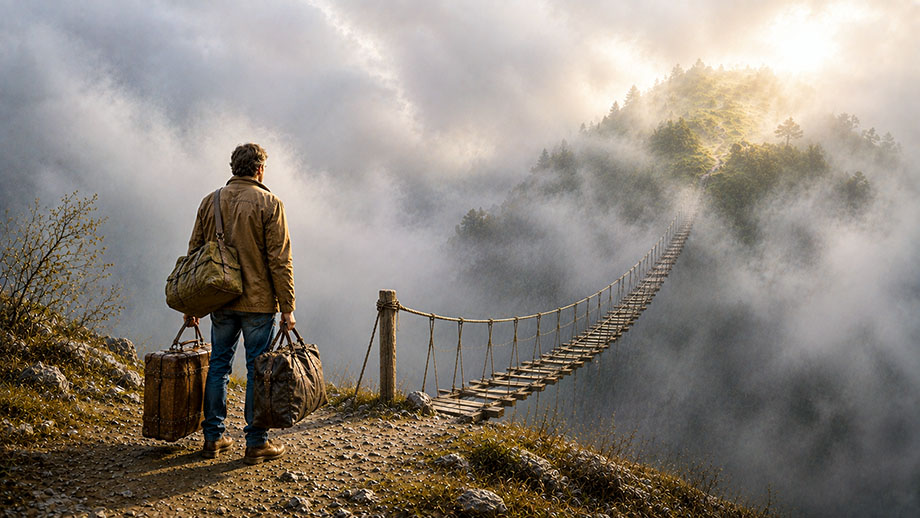
I have been a stranger in this place all my life.
An alien. Just a visitor.
I was born among a people who I didn’t understand. A society that felt alien. A culture that felt cruel and perverted.
All my life, I have struggled between two competing compulsions. Part of me felt as though I had to fit in here. I felt that I had to conform. I had to become acceptable to the people around me — the ones who were so quick to judge me and ridicule me when I didn’t imitate them.
The other part of me has always been searching for a home that I knew was somewhere else. That part of me knew that I was an alien among these people. That part knew that I was looking for something. A person? A place? A force? I didn’t know.
The more I understood that I was a stranger in this land, the more I vaguely conceived that I was looking for another place. Not a physical place that’s on a map. I was looking for the place where I would find this “something” that I was compelled to find.
 Today’s group hatred says world hasn’t learned Auschwitz lessons
 Goodbye, Sonny
 Goldwater led to Reagan Revolution; What might Ron Paul’s legacy be?
 When strangers tell us things we want to hear, we want to believe
 I’ve been an alien in this place, but I finally see my way home
 Ohio woman gets rude introduction to paranoid U.S. police state
 Want to start a ‘free city’? Check out the guidelines to see if you qualify
 If you need vacation from spouse, maybe you married wrong person
 If we disrespect skilled trades, we’re ignorant and arrogant fools