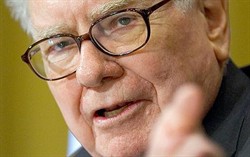
 I already knew Warren Buffet was a fool, but I didn’t know until now that he’s also a hypocrite. It turns out that the man who begs the U.S. government to raise taxes on wealthy folks has an ongoing tax liability at the company he runs. Berkshire Hathaway’s own auditors believe the company owes the IRS more than a billion dollars in unpaid taxes.
The grisly facts of Buffet’s situation are laid out in an article by a website run by Americans for Limited Government. It’s not a pretty picture if you’ve been a fan of the Wizard of Omaha. (Download the PDF of the Berkshire Hathaway annual report to see the specifics on Page 54.)
In Buffet’s opinion piece for the New York Times, he said:
“Most [wealthy people] wouldn’t mind being told to pay more in taxes as well, particularly when so many of their fellow citizens are truly suffering.”
It sounds to me as though Buffet is less worried about the suffering of his “fellow citizens” than he is in influencing politics. As I’ve pointed out before, Buffet is very welcome to contribute his own money to pay for big government if he’d like. He’s even more welcome to pay up the billion dollars that his company’s own auditors believe the company is likely going to owe. Since he’s not doing either of these, it suggests something else.
 Beauty is everywhere around us, when our eyes are open to see it
 Redefining words: Contrary to what you think, it’s not hostile to bomb cities and kill people
 In a vulnerable moment, woman confesses she’s scared to change
 FRIDAY FUNNIES
 Suppressing speech you don’t like is a lousy way to encourage tolerance
 FRIDAY FUNNIES
 Why do tax dollars fund lavish lifestyles for bureaucrats?
 Reality check: A stupid racial prank isn’t ‘the worst thing anybody can do’
 If you’re unhappy and want change, you must embrace uncertainty