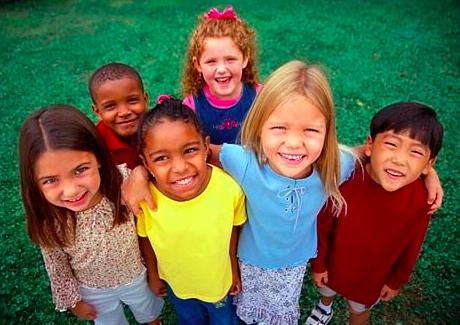
When I stepped outside my front door Sunday afternoon, I saw four young children running around playing together. On the porch next door, there was a father keeping an eye on the kids. He smiled and waved as he said he hoped they weren’t being too loud.
There was absolutely nothing unusual about this scene, but it wouldn’t have taken place this way even 20 years ago. And it would have been illegal and maybe caused riots 50 years ago.
Why?
One of the children was a little blonde girl. One was a black boy. Another girl was a black/white mix. The fourth was an Asian boy. The father was Asian, too.
The nice thing is that it was perfectly normal in a middle class southern suburb today. The tragedy is that it would have ever been a big deal and that it remains a big deal to some people even now.
When I moved to Trussville 20 years ago, it was still a sleepy little town that hadn’t quite come to grips with being a bedroom suburb of Birmingham. Not too many years before that, it had been a tiny Mayberry out in the country. And some of the thinking of some of the people still reflected a dying past.
I remember a young guy who had grown up in the town talking to me about racial changes in the area. He lived on my street and I was speculating about when we would see black neighbors there.
“Oh, they’ll never let that happen,” he said confidently, without specifying who “they” might be. “All the niggers live up on ‘Nigger Hill.’ They won’t ever let ’em move down here.”
This was around 1992, so I was shocked to hear someone still hold those sorts of views, much less openly stating them. I didn’t try to argue with him or explain the offensiveness of what he was saying. I just marked him in my mind as an ignorant redneck.
That guy left the street years ago, but he might be shocked at what the neighborhood has become. On a small circle that used to be lily white, I can quickly think of four black families, two Asian families, one mixed family (white husband/black wife) and one white mother with a mixed daughter. There are probably others I’m overlooking.
The most notable thing is that it’s no big deal. I’ve never heard a single person even mention it. As long as they’re good neighbors — and they all seem to be, as far as I can tell — I don’t think anyone is ever going to object.
That shows how far things have come in the South in 50 years. In 1964, the area was gripped by a bitter and angry battle over civil rights. A bombing of a black church had just killed four little girls. There were protests of various sorts and white politicians pandered to racist whites by promising to fight back.
So what’s changed?
The culture has radically changed, I’d say. The people whose opinions were most hardened in favor of segregation have died out. The bulk of people here today — both black and white — can’t imagine living in the world of 1964 or earlier. They grew up watching movies and television shows that treated blacks and those of other races as human beings, not as inferior creatures.
They’ve also grown up with government using legal powers to go after any hint of possible racial discrimination in employment or housing. I think those legal practices were wrong — simply because I think people have the right to private discrimination if they want — but it’s undeniable that the legal pressure has added to people’s perception that racial discrimination isn’t going to be allowed. (I’m not going to take the time to get into it here, but I think that’s actually hurt some blacks in the long run.)
At least on a surface level, skin color is mattering less and less. Culture still matters, though, and I think it’s always going to matter.
I don’t care whether I have white neighbors or black neighbors or Chinese neighbors or mixed families — just as long as they live in ways that are consistent with what seems normal to me. I want neighbors who act like decent, polite and clean suburbanites. (Actually, my yard looks the worst in the neighborhood these days, by far. So we won’t even talk about that.)
What I don’t want is white rednecks who move here from the sticks and think it’s acceptable to prop up cars on blocks in the yard or who sit on the porch drinking beer in their underwear while shooting guns at the birds and squirrels. I also don’t want black neighbors who move from the inner city and bring the culture of the ghetto to my neighborhood.
In other words, I don’t care about your skin color, but I do care how you live and whether that affects me.
Just 50 years ago — or even 20 years ago, for some — skin color was a really big deal, partly because they couldn’t separate skin color from culture. I’m sure there are still plenty for whom it’s a big deal today, but there are fewer of them and they’re becoming even more marginalized. There will always be people who hate anyone who looks different.
But things are tremendously better. In a place where little girls were being blown up by racists 50 years ago, children of different races can play in their own neighborhoods now and nobody notices.
The fact that it’s no big deal is actually a very big deal.
 For pure ignorance, it’s hard to beat Occupy Wall Street protest signs
 Sex is everywhere in our culture, but we’re starved for intimacy
 Barbarians with evil ideas taking our entire culture off deadly cliff