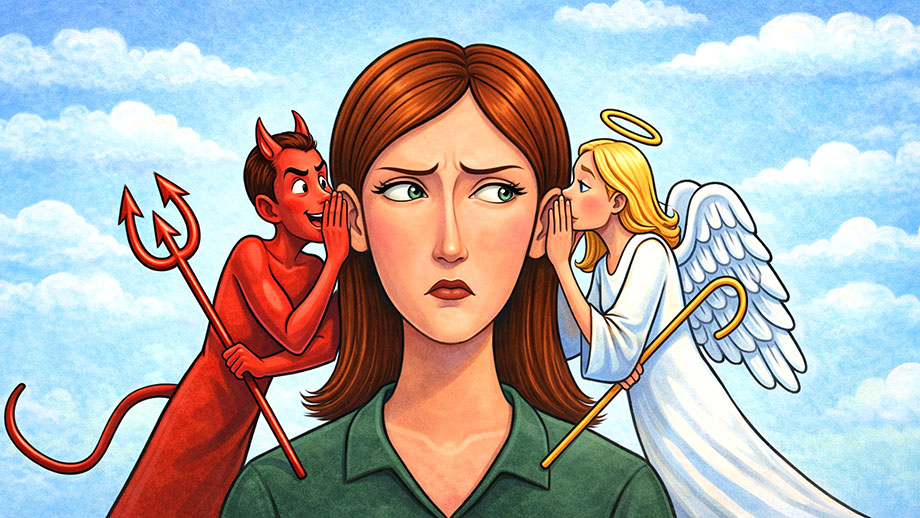
When I saw a friend tonight, she called me over with a conspiratorial look on her face. She looked around to make sure nobody else was listening. She wanted my opinion.
She told me she’s met a new man. She was excited about it. Almost giddy. I asked the typical questions about the man and where they met. She eagerly told me how much happier she is to have him to talk with as they’re getting to know each other.
She sounded like a 16-year-old who had just discovered love.
There’s only one problem. My friend is married. It’s a terrible marriage. They still live in the same house — with children — and there’s been a lot of talk about divorce. But she’s definitely — legally and firmly — still married.
It’s not my place to lecture someone about doing what’s right. She asked for my opinion, but I don’t think she really wanted it. I think she just wanted tacit permission to do what she wanted to do.
I outlined the issues as I saw them. I told her that if she wanted to pursue someone else, she owed it to everyone involved to finish dealing with her current situation. Otherwise, she was just going to be multiplying the drama and the stress in her life.
“You already know what to do,” I told her. “You don’t need me to tell you what’s right.”
“But this is what I want,” she said. “It makes me happy.”
A few minutes later, the man called her. She answered the phone like a giddy teen-ager. In the moment, she was happy — and in the moment, she didn’t care what’s right or what’s wrong.
I haven’t been able to stop thinking about that for the last few hours, not because I’m condemning my friend for her unwise choice, but because it reminds me how prone we all are to make decisions this way.
The truth is that we usually know exactly what’s right. We just don’t want it. So we pretend the answer is unclear. We complicate it. We look for exceptions.
Not because we’re confused — but because we’re unwilling to listen to ourselves.
The truth is that we know what we should do. It’s just that what is right isn’t what feels good.
And when we follow what feels good — and ignore what we know is right — we are revealing our character, even if we make up every excuse in the book to ignore the truth.
My friend isn’t a bad person. I like her. I admire her. She’s a good mother. There are a lot of good things I could say about her. But she’s human — and it’s a painfully human thing to live with an inner character that doesn’t match what we want to believe is true of us.
I don’t condemn my friend. I’ve had similar conversations — about different subjects — with various other people over the years. Most of them have similarly chosen what they wanted over what they knew was right.
What’s more, I’ve had these conversations in my own mind.
I’ve realized that I rarely have to wonder what’s right. I almost always have a strong understanding of what’s right and what’s wrong in every situation.
But just like my friend Tuesday night, I have chosen — far too often — to do what felt good and what made me happy in the short term. I’m really good at justifying myself. I’m really good at explaining why there’s an exception this time — about why it’s OK for me to do what I want to do.
It’s in moments such as these when we reveal our true moral character. There are times when other people see that character on display. There are times when we’re able to hide our private choices. But even when we’re able to keep such things hidden, we’ve revealed our character in a far more devastating way.
We’ve confessed to ourselves who we really are.
I’m hopelessly human, just as my friend is. There are times when I turn away from what my ego or my short-term thinking want. There are times when I can feel good about my character. There are others — fewer and fewer over the years, I believe — when I turn away from what’s right.
We like to pretend that knowing the difference between right and wrong is really difficult. Yes, there really are a few cases in which the right thing can seem hidden or unclear, but that’s not typical, in my experience.
We usually know what we ought to do. We know what’s right. We know what’s wrong.
Our choices don’t just reveal our character to others. We reveal it to ourselves — and we have to live with that.
Note: You can find a video version of this article on YouTube. Click here.
 Best years of our lives? For me, teen years were start of feeling like alien
 My father’s narcissistic control left me resentful of all authority
 Show me your spiritual practice, not just an intellectual theology