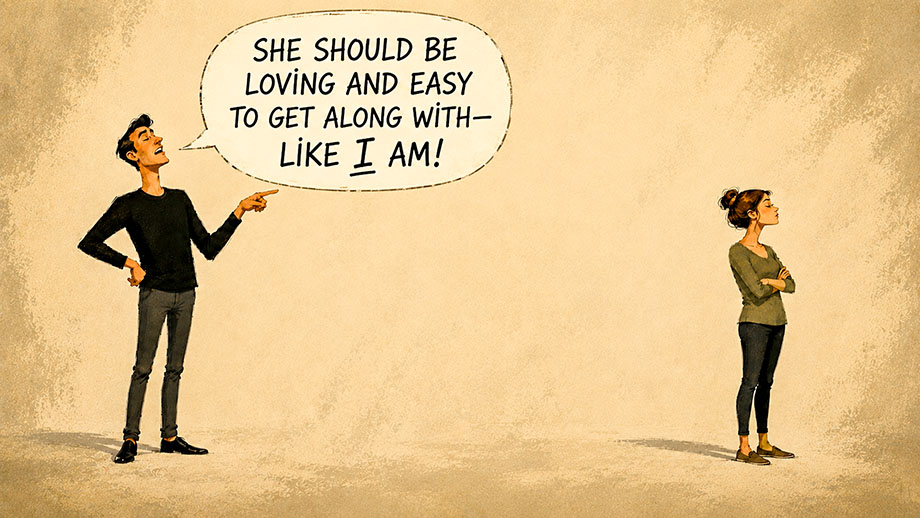
I’ve heard her name dozens of times, but I can’t remember what it is. She’s the one who nobody at her job likes. She’s the one who gets talked about when she’s not around.
But when I saw her Thursday, her face caught my attention. She was on a break from work. She was sitting quietly. Her face was blank, but she looked stressed — and she looked as though she might’ve been crying.
I sat down next to her. I can’t claim I was being kind or generous. It was out of instinct, not because I really wanted to. I couldn’t ignore someone who appeared to be in distress, even if her co-workers’ stories had prepared me to dislike her.
I wasn’t sure how to start, so I just told her I hadn’t seen her in the store recently. She told me she had been in a hospital — in an intensive care unit — for a week.
There was pain in her face. It wasn’t physical pain, but emotional distress.
As her story tumbled out, a lot of things suddenly made sense. She was no longer just a 21-year-old who snapped at co-workers and seemed to pick fights for little reason.
She was suddenly a young woman who had been battling a serious medical issue for the last year. She was someone who just had a hysterectomy because of the medical problem. She was a woman who desperately wanted to have children — and who just had to face the fact that she will never have children.
I was ashamed of myself for having judged her.
We didn’t talk that long. Maybe 10 minutes. Her break was almost over. But she said so much in those minutes.
She mentioned a day — about a month ago — when she had gotten into arguments with two other employees. Everybody had been talking about her that day — about how difficult she was and how nobody liked her.
She told me something upsetting that had happened to her earlier that day. She admitted that she shouldn’t have done or said some of the things she had that day. She didn’t try to justify anything, but she told me she had been in a lot of physical and emotional pain.
I said a few things that I thought were appropriate. I told her how sorry I was that she was having to deal with the medical issue and that she was having to deal with the loss of her ability to have the children she wanted so much. There wasn’t a lot more that I could say.
Then she went back to work and I was left to face my thoughts about myself.
I know several people who work with this woman. I’ve sat with them as they’ve talked about her and groused about her attitude. I’ve joined in the criticism. It was clear that she was in the wrong.
But I immediately knew that I had been in the wrong, too. I hadn’t lived up to my own stated values. I couldn’t defend the things I’d casually said in a critical way.
I’m not saying that what her co-workers had seen was suddenly excusable. It wasn’t. She has some attitude problems. She has acted in ways that would make anybody unpopular with fellow workers. None of that changed.
What changed is that I had to look at my unloving attitude. It’s not my responsibility to tell others — even in my heart — that they ought to make changes. My responsibility is to see that I treat people with love, whether I think they “deserve” it or not.
It would be easy to make this an object lesson about how we never know what the people around us are going through. That’s true, of course. It’s something all of us ought to remember. But in this case, there’s a different story that I need to spend some time thinking about.
I thought this story was about someone who had an attitude problem — someone who didn’t treat others well enough and who needed to make some changes.
It turned out I was right, but I was confused about who had the problem.
I still have a lot to learn.
 Instinctive desire to ‘do something’ almost always leads to bad policy
 The Alien Observer: The Outrage Machine is destroying us all
 Lesson of ‘judgment day’ error? Certainty doesn’t indicate truth