When I was growing up, I was often ambivalent about sports. By the time I was a student at the University of Alabama, I was borderline-hostile about the sports that were so important to my fellow students and many of the people around me.
I was in Tuscaloosa to learn, not to waste my time with something so brain-dead. That was what I told myself. I thought I was too good — too academically pure or some such — to care about a bunch of athletes pushing themselves around in the grass.
It wasn’t until about 10 years after I left college that I started to care about football and basketball. But let’s reword that. I didn’t suddenly discover that I loved these games or the intricacies of how they were played.
I discovered that I loved my university. Quite unexpectedly, I found that keeping up with these “childish games” gave me something I craved.
It wasn’t about football. It was a sense that I was a part of something much larger than myself.
When I watched the Alabama Crimson Tide — on the field or on the court — I realized that I wasn’t just rooting for athletes. I was experiencing pride.
This was my university. This was part of who I was.
Today is the first full weekend of the regular season of college football for 2026. When I was still arrogant and ignorant about what it really meant, I was pretty disdainful of people being excited about it.
But now, I understand. I feel the excitement. It’s not about the games. It’s about a place which still seems like home. And a part of me still feels almost embarrassed to say that.
A university is supposed to be a place of learning. And it certainly is. But it’s also something much bigger than that.
In our system, it’s often about our tribe, too. When you become part of a university or college, you are joining yourself to the history of all the people who came before you, even if you never saw that coming.
For college athletics, there are people who went to a school and love it — such as me — and there are plenty of people we disdainfully call “sidewalk fans,” those who’ve never set foot on campus.
I now understand that they feel part of something, too, even if it’s different than what I experience. In the best sense, they feel as though they’ve been adopted by a tribal brotherhood that allows them to feel a part, just as much as I do.
In the case of our major state institutions — such as my own school — there’s often a tremendous amount of state pride. For a lot of “sidewalk fans” across Alabama, that’s true. Even if those people were never educated past high school, they are seeing people who represent their home compete with the best from other states.
For many of those people, that gives them a thrill, even if they’ve never analyzed it and understood what they’re feeling.
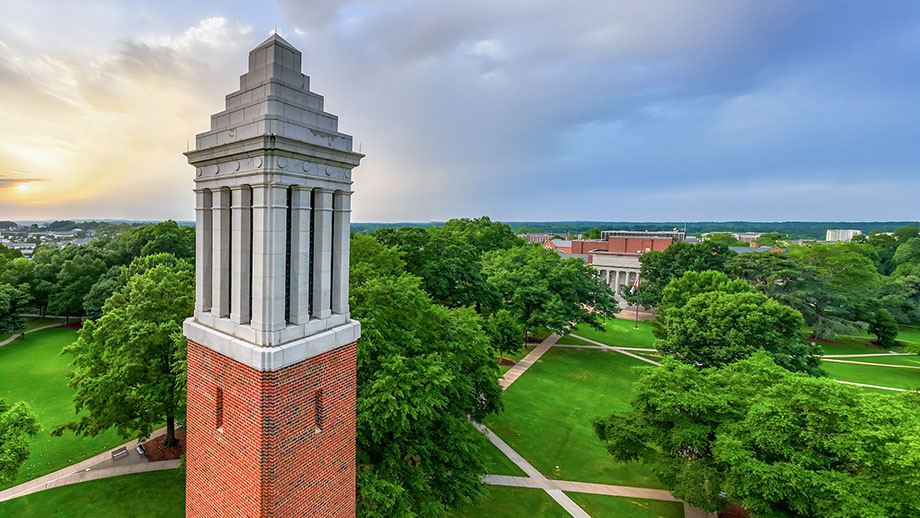
For me, it’s a reminder of sitting in Carmichael Hall for journalism classes and Morgan Hall for English classes. It’s a reminder of listening to Denny Chimes at the top of every hour. (That’s Denny Chimes you see in the aerial shot below.) It’s a reminder of the difficult work of struggling to understand the most difficult professor I ever had — a political science professor named Dan Pound — in Ten Hoor Hall.
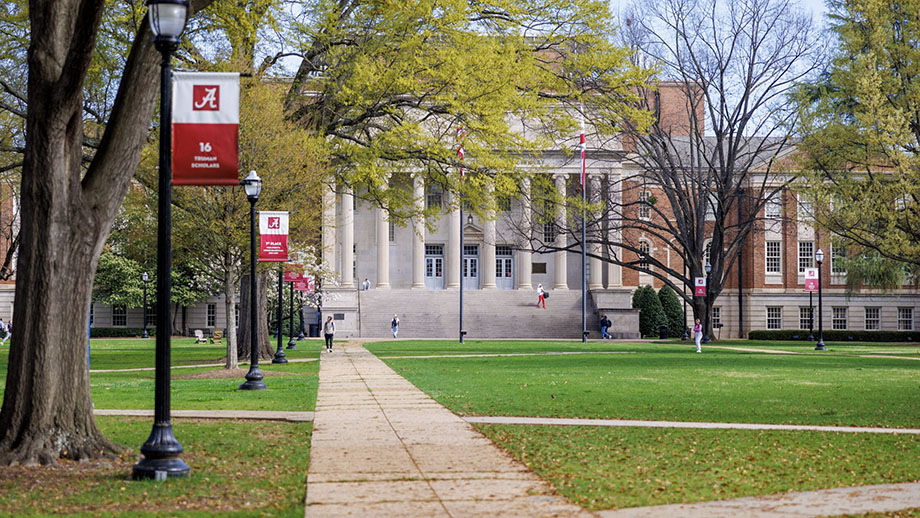
It’s a reminder of late nights in the spring and fall when I would go alone to the front of Gorgas Library — the photo above — and sit on a ledge halfway up the steps and think about what I should do with my life.
It’s a reminder of people I knew, a woman I loved, classes I skipped and time I often wasted. It’s a reminder that I became part of this organism of many thousands of students — and that even if I didn’t know them, we were all part of the same thing.
For years now, the University of Alabama has used the phrase, “Where Legends are Made,” as a marketing slogan. For a lot of people, it would seem like hokum, just as it might have seemed to me — if I hadn’t been a part of it.
You see, I have a legend about myself. It’s a story I tell myself about what shaped me and what I’ve been a part of. And my experience in Tuscaloosa is a key part of that legend.
When I watch the Alabama football team Saturday — and throughout this season — it’s not because I’m rabid about the game of football.
It’s about pride. It’s about a sense of belonging. It’s about knowing that I love this place that made itself my home for four years. And that feels pretty healthy to me.
 Left-wing distortions of church just as toxic as right-wing kinds
 Federal checks are destroying incentive to take entry-level jobs
 Can we find way to separate love of home from worship of state?