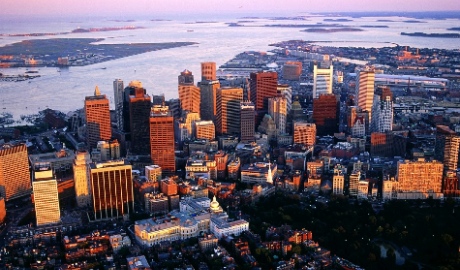
An explosion went off in Boston Monday. Three people were killed. Close to 200 more were hurt or maimed. That’s about the extent of what we can factually say about what happened toward the end of the Boston Marathon.
As soon as the news of the explosion came out Monday, people across the country started wildly speculating and making ugly accusations. On Facebook, I unfriended and blocked several people because of such nastiness. One faction claimed the entire thing was a “false flag” operation by the U.S. government. (Multiple Facebook groups were set up to make the claim, including this one.) Many people pointed to Middle Eastern terrorists. Still others, including an analyst on CNN, warned of “right wing extremists.”
It seemed that everyone had a political point to make — an accusation to hurl based on the political positions they already held. They were all looking at a virtual ink blot, but each one saw something based on the lens through which he was looking, not based on what was really there.
Back in 1996, there was a bombing in Atlanta during the summer Olympics. A security guard named Richard Jewell was treated as a suspect. He was first called a hero, but police came to suspect him. Media hounded him like hungry wolves. Jewell’s life was destroyed. Eventually, he was cleared. He had had nothing to do with the attacks, but police and media couldn’t take back the ugly and baseless accusations. They couldn’t give Jewell his life back.
 Tired of Obama? Electing Romney or another Republican won’t help
 AUDIO: We rarely realize we’re wasting our lives ’til it’s too late
 Past feels like blurry watercolor, not like the history of real people

 Goodbye, Thomas (1994-2012)
 Public discourse is distorted by constant outrage over anecdotes
 Dickens’ ‘David Copperfield’ far superior to postmodern novels
 Serenity is seeing all sides of life, choosing to continue the journey
 Theocracy? Secular liberty? Something else? Why not all of ’em?
 Corruption trial prosecutor wrong: Power is for sale to highest bidder