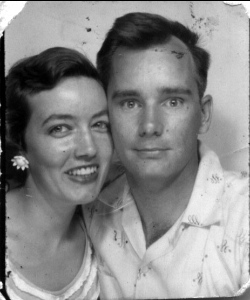
 I decided pretty early in life that I was going to be very different from my parents. It seemed easy at the time to just watch their mistakes and avoid them. So why have I spent so much time over the years hating things about myself that seem to have come straight from them?
Some psychologists would argue that it’s because I learned their habits as I was growing up, so it’s all about the environment. Others might argue that the ways in which I’m like them are simply in my genes (and thus hard to overcome), so it’s all about nature.
I think it’s some of both, as I suspect most people believe today. I think most of us would like to believe we were born as blank slates and that whatever we have is just an accumulation of the “programming” that we got from our parents and whoever else raised us, but I don’t think that’s the case. Economist Bryan Caplan looked at all the studies he could find on the subject and concluded the opposite.
In his recent book, “Selfish Reasons to Have More Kids: Why Being a Great Parent is Less Work and More Fun Than You Think,” he argues that most of what kids are going to become is encoded in their genes. He says that the studies he looked at prove that most of the things parents do to change their kids have little effect. (Here’s an EconTalk podcast in which Caplan discusses the research and his conclusions. I highly recommend it.)
But whatever it is, why have I so often in the past heard things coming out of my mouth — or seen myself acting in certain ways — that seemed to be the ghost of my (still living) father within me?
 Sorry, Hillary: Research shows it doesn’t take a village to raise a kid
 Life is too short to hide the love you would regret hiding at death
 Forced sterilization gets to heart of arrogant progressive agenda
 Jobs created or saved by ARRA stimulus? Much of it was pure fiction
 It’s best to focus on future, ’cause dead past is a ‘bridge to nowhere’
 No loneliness worse than being with others, but not the right one
 Vulnerability is scary, but failure to be open guarantees loss of love
 Trump bringing Marxism to U.S. better than Marx could’ve hoped
 Wall Street protester accidentally illustrates power of voluntary action