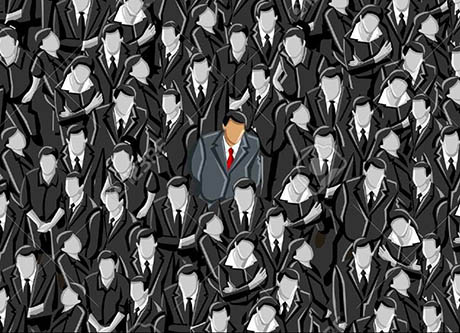
Loneliness is the most deadly disease a human soul can suffer.
It wounds a heart. It numbs a mind. It breaks a soul. Worst of all, it’s invisible to the others in the crowd.
Nobody spots the lonely man or woman going about his or her business — working, talking, laughing, caring for others, pretending all is well. The lonely soul wears a mask — and nobody sees what lies underneath until something inside breaks.
Around 1960, there were 3 billion souls on this planet. Less than 60 years later, there are around 7.5 billion of us. Those of us in the West — and particularly in the U.S. — are wealthy enough to be around as many or as few others as we want.
We’re more connected than ever. At least theoretically. A couple of centuries ago, a man might never know more than a few hundred people. He would marry from among a limited number of women. He would have few opportunities to make a living. He had no hope of making something better of himself.
With the Internet and modern transportation, I can get to know the right woman — wherever she is — and marry her. (Theoretically, at least.) I am surrounded by people with money and resources and ideas. I can travel to whatever opportunity I want. I have every hope and expectation of making something better of myself.
So why do so many of us feel most alone in crowds? Why do so many of us walk silently around in a bubble — in a lonely fog — reaching out from wounded hearts and whispering, “Are you the one who will know me? Will you be the one who will love me and never leave?”
 Life as misunderstood stranger feels like walking through a fog
 Once again, here’s a reality check: Masses don’t want libertarian ideas
 Suppressing speech you don’t like is a lousy way to encourage tolerance
 Good old fashioned propaganda handed out to kids as education
 Freedom matters more than safety, even if you can’t see that
 Does every loss of love finally become a case of ‘sour grapes’?
 The right woman in a man’s life brings out the best he has to give
 Different groups have different ideas about what ‘our country’ means
 Egypt trying to prove democracy means tyranny of the majority