
For most of my life, I had generally avoided novels written before I was born. They were stodgy. The language was outdated. They were boring. Even if they were significant in the historical sense, I saw them as the literary equivalent of reading the King James Version of the Bible.
I was wrong, of course, but I didn’t realize that until the last decade or so. I first started reading English translations of some Russian classics. I came to love Leo Tolstoy’s “Anna Karenina” and Fyodor Dostoevsky’s “The Brothers Karamazov,” among others.
Then a friend introduced me to German novelist Hermann Hesse. To one extent or another, I found that I loved “Steppenwolf,” “Siddhartha,” “Narcissus and Goldmund” and “The Glass Bead Game.” I’ve read “Narcissus and Goldmund” four times so far — and I keep finding new things to appreciate about it.
But I was slow to appreciate the English writer Charles Dickens — and I’ve come to understand that this has meant depriving myself of a kind of literary joy that I haven’t experienced for a long time. I just finished the Dickens novel, “David Copperfield,” a few hours ago — and I’d like to suggest that this book is better than almost any fiction that’s been written since I was born.
I’m left feeling serious regret that I’ve had such a huge hole in my education about literature and human existence.
 Does change really come quickly? Or do we finally accept the truth?
 Without empathy and persistence, high IQ is just a cheap parlor trick
 If you want permission to skip that Super Bowl party, here it is
 The more nutty a preacher becomes, the more rabid some supporters are
 Bias, incompetence or manipulation? Things aren’t always what they seem
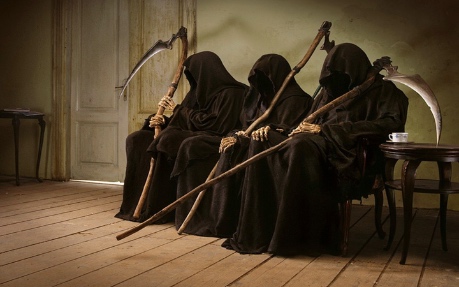 We can’t control timing of death, just what we do as we’re waiting
 Not satire this time: In New Zealand, one model cries discrimination
 We’re neither friends nor enemies, just strangers who share the past
 Anonymous attacker hit me hard, but I can’t let coward change me