Are you a subject, a citizen or a sovereign? Your answer to that question says a lot about who you think owns you, at least in the earthly sense.
There’s been a lot of talk lately about Eduardo Saverin giving up U.S. citizenship as Facebook goes public. He’s one of the founders of Facebook, so he’s becoming incredibly wealthy because of Facebook’s initial public offering. By living in Singapore and giving up his U.S. citizenship, Saverin is going to save millions of dollars now and save his heirs possibly billions of dollars by avoiding U.S. estate taxes later.
Saverin told the New York Times, though, that his move isn’t about saving money.
“This had nothing to do with taxes,” Saverin told the Times. “I was born in Brazil, I was an American citizen for about 10 years. I thought of myself as a global citizen.”
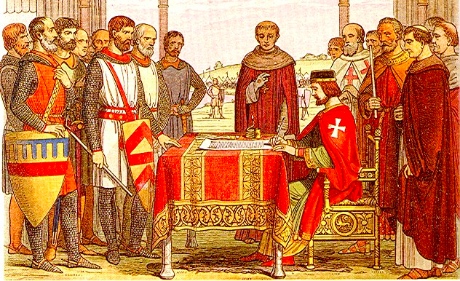
In 1215, King John of England signed what came to be called the Magna Carta. (The full name in English was “The Great Charter of the Liberties of England, and of the Liberties of the Forest.”) The English lords accepted that they were subject to the king, but they tried — sometimes unsuccessfully — to get kings to limit their absolute power over them.
 It’s a mystery why two cats bond — or why two people fall in love
 In bad times, human nature starts looking for some new scapegoats
 Homeless honor student thrown into jail for missing too much school
 Black Friday orgy of consumerism makes me very uncomfortable
 Ethnic Indian wins Miss America? Who cares? Bigots seem upset
 When voters insist on lies, politicians follow their incentives and lie
 I like Ron Paul, but he’s not winning (and I don’t believe in the system)
 Pursuit of perfection leaves me feeling shame when I’m flawed
 Entitlement monster? $2-million lottery winner uses food stamps