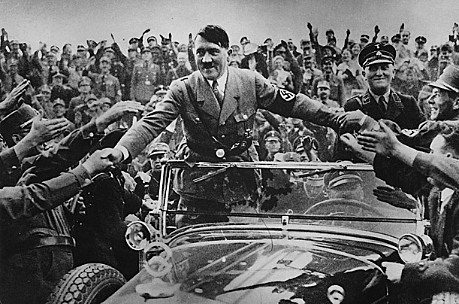
What you believe about this picture is determined by what you’ve been told about Adolph Hitler. There are very few people left alive today who can personally tell you their experiences with him, so why are you so sure that you know enough about him to have an opinion about the man?
Almost everybody today knows that Hitler was a monster. That’s what I believe. That’s almost certainly what you believe. We’ve seen all the pictures from concentration camp victims and we’ve heard his hateful rhetoric about Jews. We’ve been told that he was responsible for millions and millions of deaths. So that’s what we believe.
But why did the Germans in the picture above adore the man? Why did they see him as their hero, not as a monster? The difference is that their narrative was very different from the one we’ve been given. Because they believed a different story, they saw him as a hero.
What is a narrative? It’s just a story. When you think about what you believe — about anything — you probably tend to assume that you’ve carefully looked at all the facts and come to a rational decision. The truth, though, is that you know a tiny fraction of the facts regarding anything, even things very close to you.
 Cycles keep us circling through life until we get something right
 English teacher tells Wellesley grads: ‘You’re nothing special’ — not yet
 We rarely have wisdom we need ’til it’s too late to avoid mistakes
 Making the ‘right’ enemies shouldn’t make a politician electable
 Fear and shame can leave us in a fog that destroys relationships
 Ugly folks sue modeling industry, alleging unlawful discrimination
 Of all the world’s contradictions, our own actions confuse us most
 Will those on the left upset about Halliburton now go after Obama?
 Emotional health shapes reality of couple more than personality type