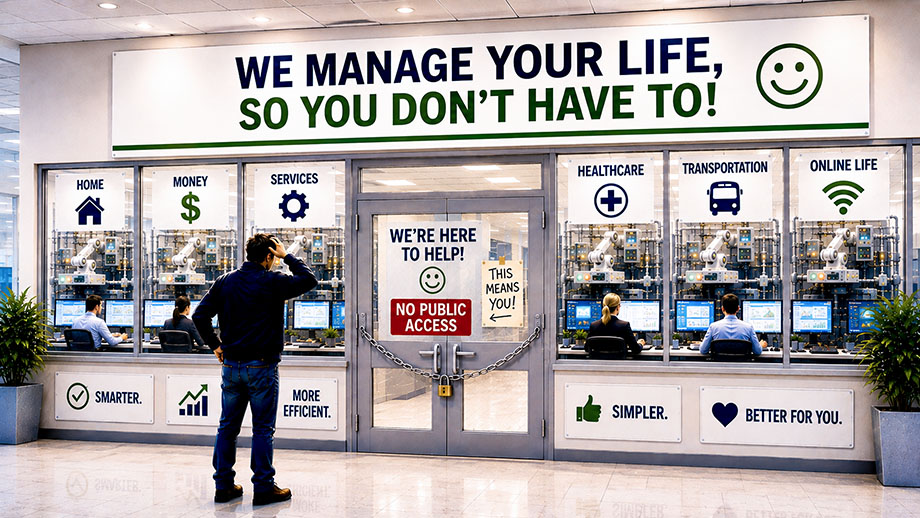
I felt angry, but more than anything, I felt powerless.
All I was trying to do was set up an account with a new company that my suburb had contracted to pick up our trash. The service provider has changed several times in the 11 years I’ve lived in my house. I normally just start getting a bill from a different company, but it didn’t work that way this time.
The new provider was a large national company. I saw its new trash containers show up for all of my neighbors, but mine never came. When I called the company, I was told that my phone number matched a local address that I’d never heard of. The only choice I was offered was to pay the bill for that address.
When I called from my office phone, I was sent straight to voicemail and nobody ever called back. When I called the city to ask for help, I was told to call the company. There was nothing they could do.
There is no local office for the company — and nobody would return my calls.
I went for months without trash pickup. Nothing changed until a different company took over the contract. I now have trash pickup again. It feels like a huge win that they’ll at least take my money.
This entire mess is just one tiny incident in a growing collection of ways in which I feel I’ve lost control of my life — in big ways and tiny ways — to faceless companies, indifferent bureaucrats and bored gatekeepers.
These people have more and more power over my life. I’m feeling powerless.
And I’m angry about it.
 Will Honduras establish the first modern free city? It’s possible
 Instinctive desire to ‘do something’ almost always leads to bad policy
 What’s the best word for those of us who just want to be left alone?
 If you made bad partner choice, it’s up to you to make a change
 Material things can be replaced, but loved ones worth far more
 Tough problem: What does a free society do about unfit parents?
 VIDEO: What if this is Trump’s 2026 remake of Groundhog Day?
 For rest of my life, I’ll constantly re-interpret mother I didn’t know
 No, I can’t support your campaign; changing candidates won’t fix things