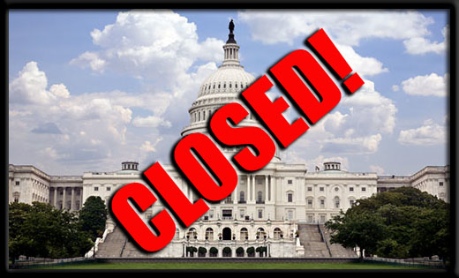
Unless some last-second deal emerges, the U.S. government will be shut down until squabbling Democrats and Republicans can reach a budget agreement. The media is filled with stories about how terrible this is. The Boston Globe even had an online headline that read, “US bracing for government shutdown no one wants.”
Are you scared of this terrible thing called a shutdown yet?
I’m ignoring my better judgment to comment on this, simply because almost anything you say about it is used as fodder by partisans of one side or the other as evidence that they’re right. But I’m not “with” either side on this.
I’m certainly not with the Democrats, who want to grow the size of government bigger and bigger and bigger, including funding the ObamaCare monster. But why would I support the Republicans, who are happy to vote for a monstrously huge government that’s almost as big, just as long as ObamaCare is delayed for a bit?
For years, Republicans have shown that they don’t oppose Big Government. They simply oppose making government quite as big as what Democrats want. And they certainly favor ever-increasing funding for the military-industrial complex that Republican President Dwight Eisenhower warned us about? (But who can trust Eisenhower? Those five-star generals are notorious peaceniks who don’t want to fund the military. Right?)
 I like Ron Paul, but he’s not winning (and I don’t believe in the system)
 Creating new enemies: Latest crisis points to need to end Afghan war
 Relationships he couldn’t mend were tragedy of my father’s death
 It’s hard to shut off our internal chatterboxes to listen to silence
 As we enjoyed the sunset together, language and borders didn’t matter
 Good character matters far more than winning political arguments
 Words I wrote as idealistic teen suggest I’m still the same inside
 Trump’s rabid defenders selling their souls for a narcissistic liar
 Patterns that made old mistakes keep us making same old errors