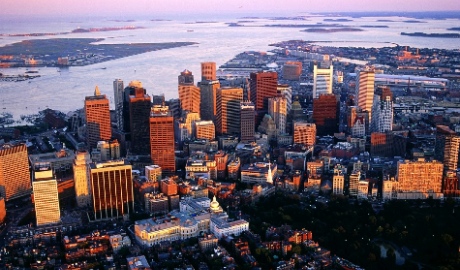
An explosion went off in Boston Monday. Three people were killed. Close to 200 more were hurt or maimed. That’s about the extent of what we can factually say about what happened toward the end of the Boston Marathon.
As soon as the news of the explosion came out Monday, people across the country started wildly speculating and making ugly accusations. On Facebook, I unfriended and blocked several people because of such nastiness. One faction claimed the entire thing was a “false flag” operation by the U.S. government. (Multiple Facebook groups were set up to make the claim, including this one.) Many people pointed to Middle Eastern terrorists. Still others, including an analyst on CNN, warned of “right wing extremists.”
It seemed that everyone had a political point to make — an accusation to hurl based on the political positions they already held. They were all looking at a virtual ink blot, but each one saw something based on the lens through which he was looking, not based on what was really there.
Back in 1996, there was a bombing in Atlanta during the summer Olympics. A security guard named Richard Jewell was treated as a suspect. He was first called a hero, but police came to suspect him. Media hounded him like hungry wolves. Jewell’s life was destroyed. Eventually, he was cleared. He had had nothing to do with the attacks, but police and media couldn’t take back the ugly and baseless accusations. They couldn’t give Jewell his life back.
 Mental illness can be hidden in any family, changing lives forever
 Ground Weasel Day is important in predicting next four political years
 Laughing at the ‘rapture cult’? Those who believe in the state are no different
 If you don’t have a burden in life, you probably won’t achieve much
 Majority of Americans approve of feds snooping in name of security
 What did he have to lose? Man’s crazy tactic leads to romance
 I love my iPad, but I suspect that books are better for ‘deeper’ learning
 To think clearly, turn off the tube: Your television is not your friend
 Check out Aya Katz’s interview with me about art and culture


