My father was often a bully with his children — but he hid it from anyone outside the family.
He didn’t call it bullying, of course, but he believed he had the divine right to whatever he wanted from us. I’m not talking about when we were small children, although he was more overt and hostile about it then. No matter how old we got, he never accepted us as independent adults.
When he faced even the slightest pushback from me — even in the last years of his life — he would get angry and assert his right to control me. He constantly said things such as, “As your father, it’s my right to…” and then he would name whatever he was demanding at the moment.
In psychological terms, my father had no respect for his children’s boundaries. This lack of ability to respect other people’s boundaries is common with narcissists, but since I grew up believing that his practices must be normal, it took me a long time to try to set boundaries with him as an adult.
After I cut off all contact with him more than a decade ago — after he refused to go to therapy with me to deal with our unhealthy relationship — he refused to accept that boundary. He continued to email me, call me and to show up at my door. At times, he was pathetic and manipulative. Other times, he made threats that scared me — sometimes about vague “dire consequences” if I didn’t do what he wanted.
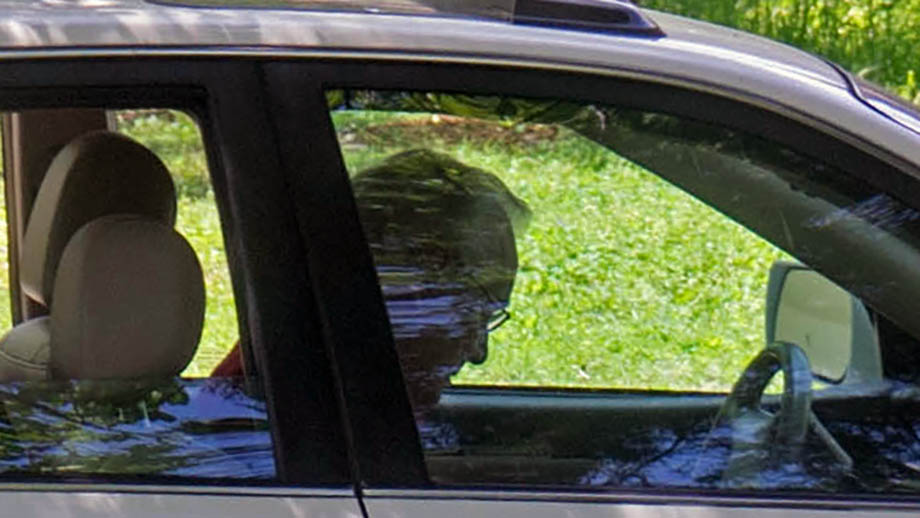
The photo above is from the last time he came to my house.
 Coming soon: Meet John Crispin, Demopublican for U.S. president
 China’s one-child policy: Unintended consequences on a grand scale
 Free speech is our natural right, not a gift granted by politicians
 Political satire works best when exaggerated truth is at its core
 Jesse Jackson Jr. demands Obama hire 15 million unemployed Americans
 Little girl helped me figure out why I’m not attracted to her mom
 Fear of intimacy causes confused people to run from love they need
 Encounter with friend reminds me: Self-improvement is path to change
 Minor killing is human nature, but massive slaughter requires states