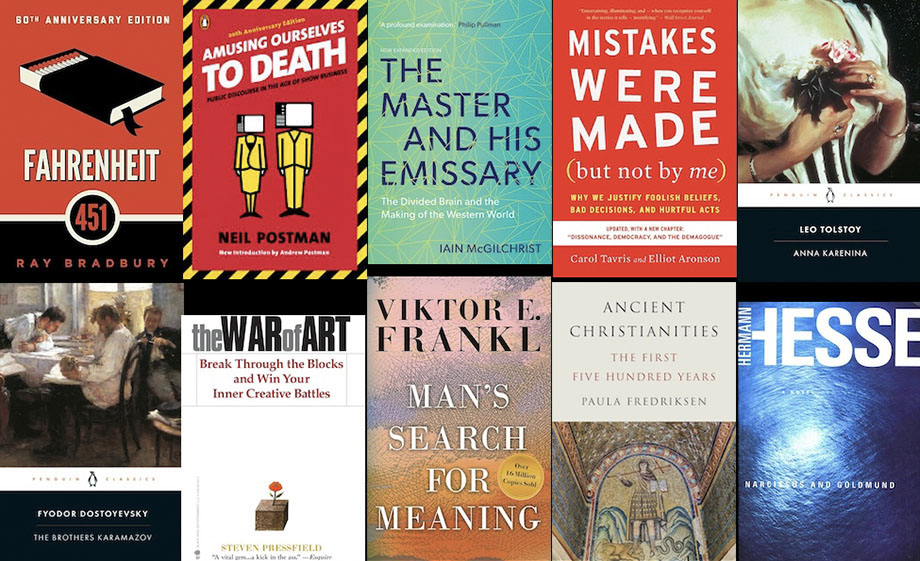
I’ve been making book recommendations for many years, but I’m not sure I’ve ever actually written out a formal list. I’ve done that now — and it was a lot harder than I thought it would be.
Although I can strongly recommend each of the 10 books on this list, I can’t say these are the 10 books I’d most recommend over everything else. There are a few that would be on any list of my favorite books, but beyond that, there might be 40 or 50 that I feel equally strongly about.
Even worse, I feel as though I would have different lists for different kinds of people and for different circumstances.
As a result, I think I’m going to try to maintain a top 1o list, but the books on that list are going to change over time. In addition, I’m going to add some speciality lists at some point — because these first 10 do no more than scratch the surface of what I’d like you to read.
 What is this old longing for home? It’s the need for unconditional love
 If I look closely at my old self, there’s a lot which is now dead
 Bad Quaker podcast interviews me
 Librarian wants random winners after boy ‘hogs’ reading contest
 Petty politics as usual just might be Chris Christie’s bridge to obscurity
 I feel hope for future, because truth is real and love is possible
 Don’t believe the words they say: Politicians revert to their incentives
 My need to win isn’t pretty, but it’s key to who I’ve always been
 After chimp’s mother died, mama dog raised baby as one of her pups