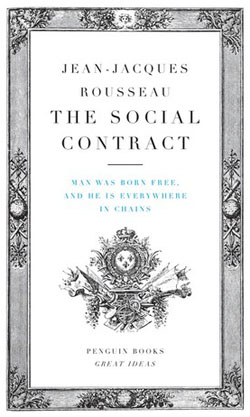
 I never agreed to be ruled by a state, yet philosophers and political scientists confidently speak of “the social contract” as though it’s something we voluntarily enter into. It’s a coercive fraud.
If a car dealer unilaterally parked a vehicle in your driveway and demanded that you started making payments for it — payments that he determined on a car that he chose for you — there’s little question that you would refuse.
“By what right do you make this choice for me?” you would ask. “What gives you the right to set the price and the terms? And why do you think I’m obligated to an arrangement I never agreed to?”
That’s exactly what states do, though. The idea of us all having a “social contract” with one another is supposed to make it legitimate and legal. It’s a justification that serves to keep you from demanding to be left alone.
I said something a couple of days ago about this so-called contract and I was planning to write something about it this week. But I just came across an article by Robert Higgs at the Independent Institute’s website that does a great job of showing what a sham this so-called contract is, so I’m going to ask that you read that instead. Would you sign this thing voluntarily?
 Odd interest in UK’s royal family suggests remnant of need for ruler
 Top secret weapon for homeland security: the ‘Sno-Cone’ machine
 Could we solve tough problems if we didn’t know they’re difficult?
 Chappelle is offensive and crude, but what he’s doing is important
 Living without human connection? It’s an empty life with no meaning
 Material things can be replaced, but loved ones worth far more
 These aren’t revolutionaries; they’re nothing but thugs and looters
 ABC execs’ desire to delay interview shows misunderstanding of their job
 Norman Rockwell or Norman Bates? Holidays are dysfunctional for some