When I was a little boy, I was obsessed with an unusual question. I wanted to know why I was here — and why I was part of my family.
Most children ask a lot of “why” questions. I did, too. But the question that fascinated me most wasn’t why the sky was blue or why birds could fly. I wanted to know what I was supposed to be — and to answer that, I first had to answer a more fundamental question: Why was I here?
Somehow, when I was about 3 years old, I reached a conclusion. I don’t remember how I arrived there, but I became convinced that I was part of my family because I was there to help.
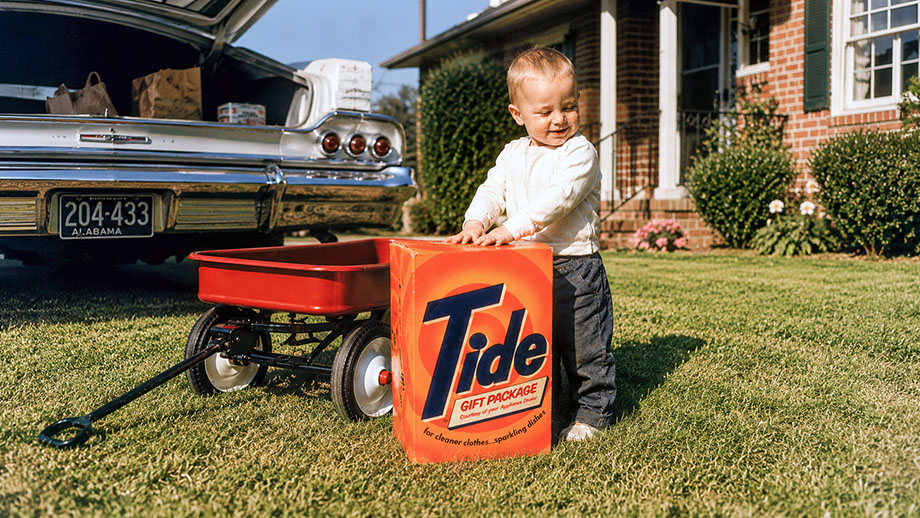
One day, my parents were unloading groceries from the car. While they were carrying bags into the house, I quietly went outside, got a huge box of Tide detergent out of the trunk and tried to carry it inside myself.
The box was much too heavy, so I found my little red wagon. By the time my mother discovered what I was doing and took a picture, I was struggling to load the box into the wagon so I could pull it to the house. I managed to drag it only a few feet before giving up in tears.
Looking back, I don’t think that’s just a cute story about an overly ambitious little boy.
Nobody had asked me to help. Nobody had assigned me a chore. My behavior flowed naturally from the answer I had reached to a single question. I believed I was there to help, so helping simply seemed like the obvious thing to do.
I’ve been thinking lately that this may be true of all of us. The quality of our lives depends less on the answers we’ve found than on which questions we’ve chosen to organize our lives around.
Questions are powerful because they’re rarely satisfied with remaining questions. They produce answers. Those answers become assumptions. Our assumptions shape our priorities, our priorities shape our character and our character shapes our lives.
Ask the wrong questions, and even perfectly valid answers can carry us in the wrong direction.
Every culture teaches people which questions are worth asking. It also teaches them — usually without anyone noticing — which questions can safely be ignored.
Our culture spends an extraordinary amount of time encouraging us to ask questions like these:
How do I become successful?
How do I make more money?
How do I get more followers?
How do I get people to admire me?
Which political party is right?
How do I win?
None of those questions is inherently wrong. Money matters. Winning matters. Success matters. At least some of the time. But they’re all secondary. If they become the organizing questions of our lives, they’ll quietly shape everything else about us.
That’s one reason I’ve gradually become less interested in collecting better answers and more interested in asking better questions.
When I look back over more than fifteen years of writing, I see essays about politics, technology, psychology, family, religion, beauty, creativity and culture. For years, I assumed those were my subjects.
I no longer think they were. I think they were different paths leading me toward the same destination.
Again and again, I’d find myself backing away from whatever immediate issue I was writing about because another question kept appearing underneath it. Eventually I realized that the issue I thought I was writing about was rarely the real issue.
That journey eventually led me to three questions that now seem more important than all the others.
The first is the foundation beneath everything else.
What is true?
That sounds almost too obvious to ask, yet much of our public life revolves around a different question: “How do I defend what I already believe?”
Human beings are remarkably good at protecting our opinions, our identities and our tribes. We instinctively search for evidence that confirms what we already think while quietly overlooking evidence that doesn’t. The pursuit of truth demands something very different. It requires enough humility to admit we may be mistaken and enough curiosity to follow evidence wherever it leads.
That naturally raises another question.
What kind of person must I become if I want to recognize truth instead of merely defending my own opinions?
This isn’t really a question about intelligence. It’s a question about character.
Pride clouds our judgment. Fear does, too. So does tribalism. So does the desire to protect our own egos. The people who come closest to understanding reality aren’t necessarily the smartest people. They’re often the ones who have developed the humility to change their minds, the curiosity to keep learning and the courage to admit they had been wrong.
Eventually those questions lead somewhere deeper still.
Suppose we become more honest. More humble. More capable of seeing reality as it actually is. Then what?
What kind of life is actually worth living?
Notice how different that question is from the ones our culture constantly places before us.
It isn’t asking how to become famous, wealthy or admired. It isn’t asking how to defeat opponents or build a larger audience. It isn’t asking how to accumulate status. It’s asking what remains after all those things have come and gone.
I’ve become increasingly convinced that the real answers aren’t especially glamorous.
Truth. Beauty. Love. Character. Family. Friendship. Purpose. Creating something worthwhile. Serving other people.
Looking back, I think that’s what I’ve really been writing about all these years. Politics interested me because it revealed something about human nature. Technology interested me because it changed the way we relate to one another. Psychology interested me because it helped explain why we deceive ourselves. Beauty mattered because it reminded me that life is about more than efficiency. None of those subjects was ever the destination. They were simply different roads leading toward the same place.
The little boy struggling with the box of Tide didn’t understand all of that. He simply believed he was there to help, and that answer shaped what he did next.
I think the same thing is happening in every one of us.
Whether we realize it or not, we’re all organizing our lives around answers we’ve reached to questions we’ve chosen — or that our culture has quietly chosen for us.
That’s why the most important decision we make may not be which answers we believe. It may be which questions we allow to shape the people we’re becoming.
If I had to reduce thousands of pages of writing to a single thought, it would be this:
Become the kind of person who can recognize truth, create beauty and love others well — even though the surrounding culture will almost never reward you for doing so.
 How do we often know things which we shouldn’t really know?
 ‘Vote iPhone in 2012’: Let’s bring democracy to the phone world
 How can I share what’s obvious when nobody will listen or see?