I did something radical last night. I turned my iPhone off.
I haven’t slept without my phone turned on and within easy reach since I got my first iPhone — in June 2007. I activate its “do not disturb” mode every night. But every time I wake up for a few minutes — or longer — I’m checking for notifications and messages and emails and whatever else I can find.
For almost 20 years, I’ve slept next to a small mobile computer that has ruled my life.
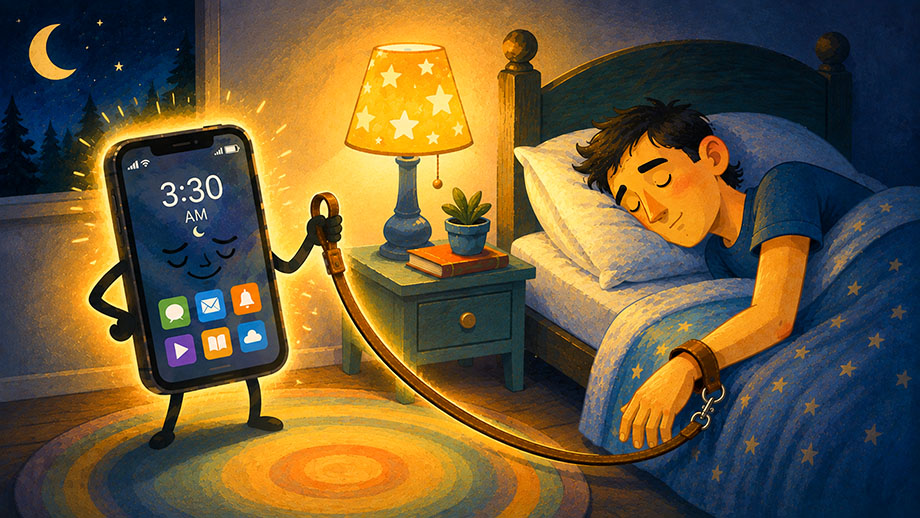
At 3:30 a.m. — Sunday night, Monday morning — I was trying to get to sleep and having little luck. I had been in bed for almost two hours. I had too much on my mind that I was going to do Monday. I kept thinking about the people who might call, the text messages I might have waiting and a dozen other things that could be waiting for me each time I woke up.
Suddenly, I rebelled against this electronic tether to the outside world. I didn’t want to think about it. I didn’t want to wonder what notifications might be waiting for me.
I hesitated. The idea of shutting it off felt wrong. But I finally reached over and slid the control to turn off the phone.
For the first time in years, I felt free. Just a little bit.
And then I slept peacefully.
When I woke up a couple of times in the night, it was odd not to check my phone for email and messages and other notifications.
It’s not that I am so important that I get urgent notifications that I absolutely must know about. The urgency is in the little red numbers — and in my need to see what I’m missing.
But last night, I didn’t know what I was missing. And when I woke up in the morning and turned the phone back on, life went on as normal. I hadn’t missed anything of importance. Everything was still there — to be dealt with or ignored. Most of it could be ignored.
I was thrilled when mobile phones became cheap enough for me to get one. The early models from Nokia and Ericsson and Motorola were amazing at the time.
But everything changed in 2007 when Steve Jobs took to the stage at Macworld to announce the iPhone. This was the first smartphone worth owning, from my point of view. On June 29, 2007, I stood in line with my girlfriend and two other friends to buy the first model.
As Jobs promised about every device he launched, that iPhone was “insanely great.”
For the first few years, this was an amazing digital tool. It served me very well. It enabled me to do things that I’d never been able to do before. It was life-changing.
At some point, I started having the vague feeling that there were costs to being connected to the world every moment of every day. I never saw that coming.
Before the smartphone changed everything, I could happily check emails in the morning without any feeling that I should have seen them immediately. I never felt that I needed to be available anytime someone wanted to send me a text message. Most of all, though, there were no apps — for dozens of services — demanding my attention.
At some point, I realized that my digital servant had slowly become my digital master.
I don’t want to go back to “dumb” phones. I’m not sure I could do my job without my iPhone. I can’t go back to the technology of 2007. So how can I recover control? How can I get back to the feeling that the tool is serving my needs — instead of the tool dictating how I’m going to live?
The only thing I know for certain is that my life got better last night when I turned this phone off and ignored the notifications that everyone else was throwing at me.
Is that the solution? Just turn the phone off at night? Or do I need to get rid of all notifications? Do I need to weed out the services that make me feel this way?
I don’t pretend to know the answer.
Maybe freedom in the digital age isn’t about abandoning technology. Maybe it’s about remembering that we’re still allowed to say “not right now.”
 As communists gain strength, things could go from bad to worse in Russia
 Flashy ‘stimulus’ projects conceal truth that the state destroys wealth
 Please be patient with my site as it’s being completely remodeled