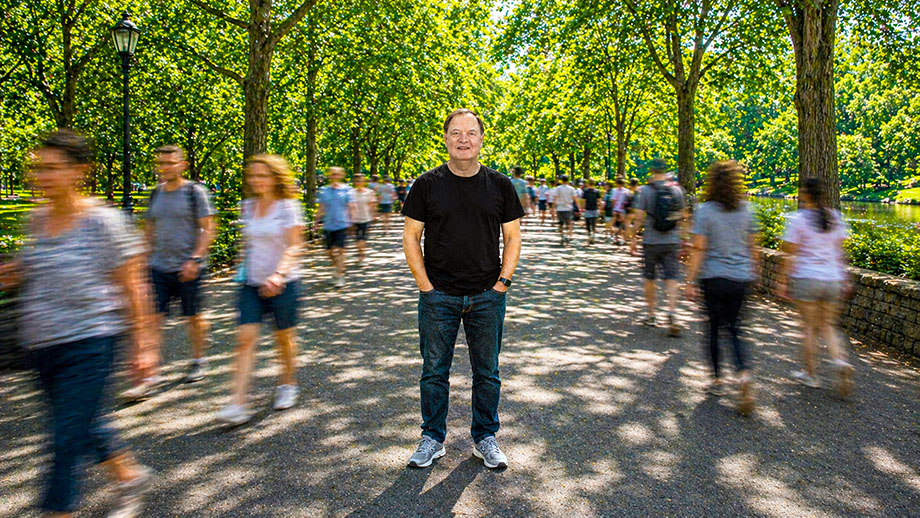
I stood in a park near my house the other day and watched people.
It was a normal scene. The new leaves of spring made the trees look green. The light came through in soft patches. People moved in both directions — talking, laughing, walking with purpose. Nothing about it would have caught anyone’s attention.
I was standing right in the middle of it.
I wasn’t pushed aside. Wasn’t ignored. Certainly wasn’t rejected.
But I didn’t feel part of the scene. I didn’t feel like those people. I somehow wasn’t one of them.
I could hear pieces of conversations as people walked past. I could tell who was relaxed and who was distracted and who was in a hurry. There was nothing unfamiliar about what I was seeing.
It felt like a scene that I was close enough to recognize, but not close enough to step into. I didn’t know how to belong there.
When I was younger, I would have reacted to that feeling differently. I would have felt some combination of frustration and anger. I would have assumed something needed to be fixed — either in me or in the world around me.
I would have tried to close the gap. I don’t feel that way anymore.
 I felt shame for my lack of love, but God said, ‘You can do better’
 Can I talk myself into not wanting great things I fear I’ll never have?
 From hole I’ve fallen into today, world is a very alienating place
 A year after first seeing doctor about cancer, how much have I learned?
 Creative process isn’t pretty, but it provides real joy when it works
 Food addiction means you’re missing something important that you need
 Trump supporter: Trump imposes crippling tariffs to get rid of tariffs
 Zimmerman verdict is correct, but there’s no cause for celebration
 We rarely have wisdom we need ’til it’s too late to avoid mistakes