Are you a subject, a citizen or a sovereign? Your answer to that question says a lot about who you think owns you, at least in the earthly sense.
There’s been a lot of talk lately about Eduardo Saverin giving up U.S. citizenship as Facebook goes public. He’s one of the founders of Facebook, so he’s becoming incredibly wealthy because of Facebook’s initial public offering. By living in Singapore and giving up his U.S. citizenship, Saverin is going to save millions of dollars now and save his heirs possibly billions of dollars by avoiding U.S. estate taxes later.
Saverin told the New York Times, though, that his move isn’t about saving money.
“This had nothing to do with taxes,” Saverin told the Times. “I was born in Brazil, I was an American citizen for about 10 years. I thought of myself as a global citizen.”
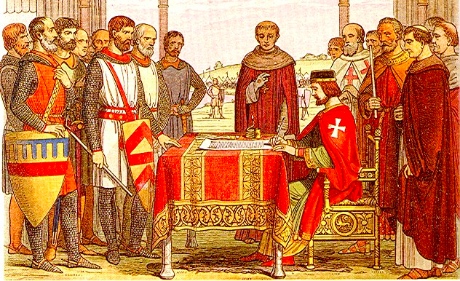
In 1215, King John of England signed what came to be called the Magna Carta. (The full name in English was “The Great Charter of the Liberties of England, and of the Liberties of the Forest.”) The English lords accepted that they were subject to the king, but they tried — sometimes unsuccessfully — to get kings to limit their absolute power over them.
 Our voluntary decisions can lead to a new beginning for America
 Without motivation, dreams fade,
 Jalen Hurts’ team-first attitude is antidote to ESPNization of sports
 For first time in my life, I fear not finding love and life I’ve needed
 Father who I saw as Mr. Morality turned out to be a liar and a thief
 Intolerance isn’t just an American thing; it’s common to all humans
 Wealth can give us nice lifestyles, but it can also make us spoiled whiners
 Reality check: A stupid racial prank isn’t ‘the worst thing anybody can do’
 Fly your freak flag: You’re not going to ruin your kids with ‘crazy’ genes