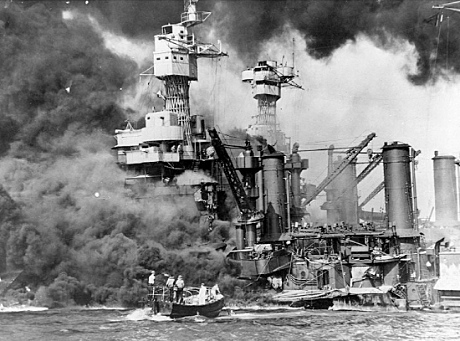
When I was growing up, I learned the standard Pearl Harbor attack story. The peaceful United States was minding its own business and staying out of the war raging in Europe when Japan suddenly attacked Pearl Harbor without any provocation. The Japanese were motivated simply by imperialist plans for conquest, we were assured.
I loved military history back then, and the war in the Pacific during World War II was my favorite. (If you ever want me to bore you with a detailed account of the Battle of Midway, I’ll be happy to do so, because it’s my favorite battle.) I have tremendous admiration for the people who fought that war and who sacrificed greatly in order to win it. Unfortunately, I can’t say the same thing about the political leaders whose actions led to the war.
When I was 12, I learned Franklin Roosevelt’s rousing speech on Dec. 8, 1941, asking Congress to declare war on Japan. (I can still do large parts of it, and I’m sure it’s funny to hear me emulate FDR’s accent.) I believed that Roosevelt was a great wartime leader.
 Arrival of better financial days makes me value my painful past
 Life has a brutal habit of forcing us to confront our own hypocrisy
 Influence of Bradbury’s classic novel pushes me toward change
 Cult’s targeting of family funeral points to folly of speaking for God
 Our self-deception is attempt to justify whatever we do to others
 Visit from his dead parents shook father’s disbelief in supernatural
 OK, morons, we’ll finally admit it: We really are smarter than you
 On this website’s 10th birthday, I’m planning for the next decade
 Identity crisis might lead to integration of my inner selves