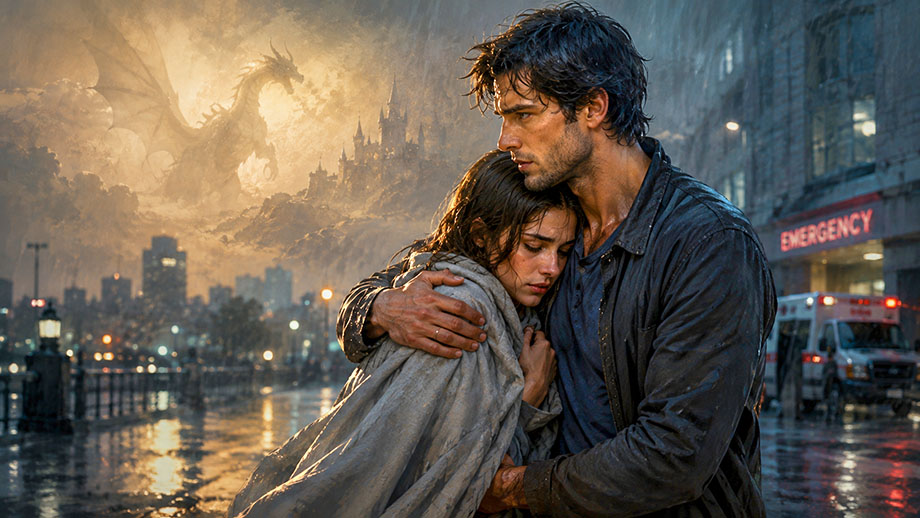
I’ve always wanted to be the hero. Even more than that, though, I wanted to be her hero.
It’s the oldest fantasy in my childhood memory. I have no idea how it started. I don’t remember what could have put the idea into my thoughts, but I was still a very small child when it became an obsession for me.
The girl was always in trouble of some kind. I made up all sorts of stories each night as I went to sleep. The specific dangers changed, but the pattern was always the same. The girl I loved was in trouble. She needed to be rescued. I came to her rescue in her moment of need — and she adored me as her hero and rescuer.
As an adult, this sort of story comes with all sorts of baggage, of course. Mature adults aren’t supposed to take such stories seriously. Some even claim that this historical and mythological imagery is sexist — that a woman shouldn’t need to be rescued and that a man shouldn’t want to be her hero.
But I don’t care. At my core, I still want to be her hero. When my princess is deepest in distress, she calls out for help and I rescue her. It’s a need that’s deeply embedded in culture and possibly genetics. And even though it’s ridiculous imagery from a child’s fairy tales, I still want to rescue my princess.
 If a bad relationship needs to end, fake Facebook posts won’t fool us
 How terrified would your child self have been of your current adult life?
 Do tales of ‘Black Friday violence’ reflect reality or just our bias?
 I’ve jumped off a career cliff and now I have six months to find net
 Taxation is theft: It’s time to take a stand about a serious moral issue
 Want to really understand someone? Visit the places that shaped his past
 I am angry that life doesn’t work the way I once learned it should
 Smart people and profit motive have made world a better place
 Insanity is part of being human – and we’re all potentially unstable