Are you a subject, a citizen or a sovereign? Your answer to that question says a lot about who you think owns you, at least in the earthly sense.
There’s been a lot of talk lately about Eduardo Saverin giving up U.S. citizenship as Facebook goes public. He’s one of the founders of Facebook, so he’s becoming incredibly wealthy because of Facebook’s initial public offering. By living in Singapore and giving up his U.S. citizenship, Saverin is going to save millions of dollars now and save his heirs possibly billions of dollars by avoiding U.S. estate taxes later.
Saverin told the New York Times, though, that his move isn’t about saving money.
“This had nothing to do with taxes,” Saverin told the Times. “I was born in Brazil, I was an American citizen for about 10 years. I thought of myself as a global citizen.”
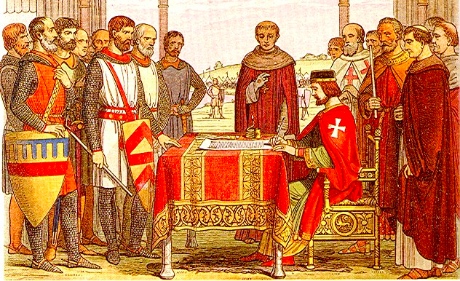
In 1215, King John of England signed what came to be called the Magna Carta. (The full name in English was “The Great Charter of the Liberties of England, and of the Liberties of the Forest.”) The English lords accepted that they were subject to the king, but they tried — sometimes unsuccessfully — to get kings to limit their absolute power over them.
 New YouTube channel launched for video versions of my essays
 Why do we create families? It’s a ‘matter of the heart,’ not head
 I wanted to be Capt. James Kirk; have I become Ignatius J. Reilly?
 With space shuttle finally dead, free market can do better job in space
 I don’t understand YouTube fame, but I’m drawn toward it anyway
 Israeli-Palestinian conflict can’t be reduced to heroes and villains
 Our need for love lets us ignore past pain and feel hope instead
 Creators must be wary of making propaganda or work for own ego
 At what point does a president become a dictator to be impeached?