My father was often a bully with his children — but he hid it from anyone outside the family.
He didn’t call it bullying, of course, but he believed he had the divine right to whatever he wanted from us. I’m not talking about when we were small children, although he was more overt and hostile about it then. No matter how old we got, he never accepted us as independent adults.
When he faced even the slightest pushback from me — even in the last years of his life — he would get angry and assert his right to control me. He constantly said things such as, “As your father, it’s my right to…” and then he would name whatever he was demanding at the moment.
In psychological terms, my father had no respect for his children’s boundaries. This lack of ability to respect other people’s boundaries is common with narcissists, but since I grew up believing that his practices must be normal, it took me a long time to try to set boundaries with him as an adult.
After I cut off all contact with him more than a decade ago — after he refused to go to therapy with me to deal with our unhealthy relationship — he refused to accept that boundary. He continued to email me, call me and to show up at my door. At times, he was pathetic and manipulative. Other times, he made threats that scared me — sometimes about vague “dire consequences” if I didn’t do what he wanted.
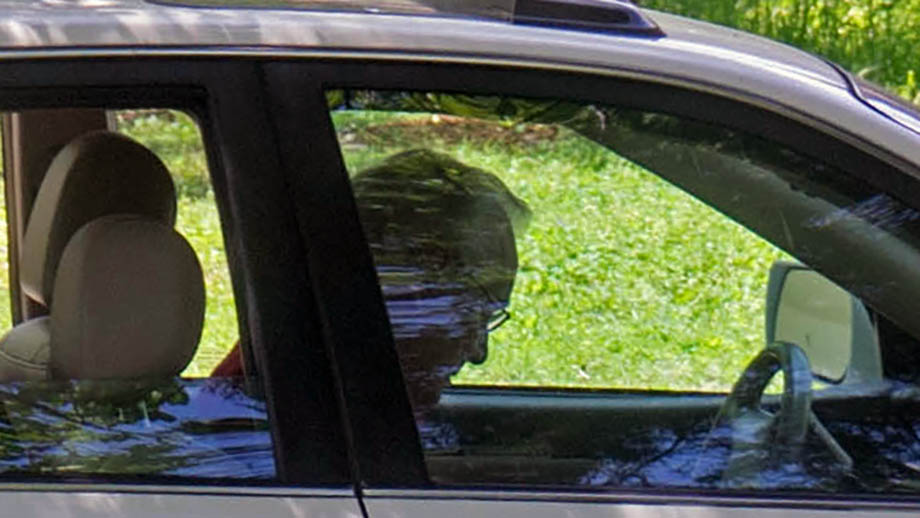
The photo above is from the last time he came to my house.
 Love’s closest counterfeit sounds like love but acts like selfish need
 Please read this: If you love books and smart women, you might cry, too
 Have choice between two loves? Failing to choose may lose both
 I can live without ‘Galt’s Gulch,’ but I need my ‘Akston’s diner’
 3 years after my father’s death, happy memories getting stronger
 I keep forgetting that I can’t save those who don’t want to be saved
 Life is too short to hide the love you would regret hiding at death
 Why does most love hurt us? Because one usually loves more