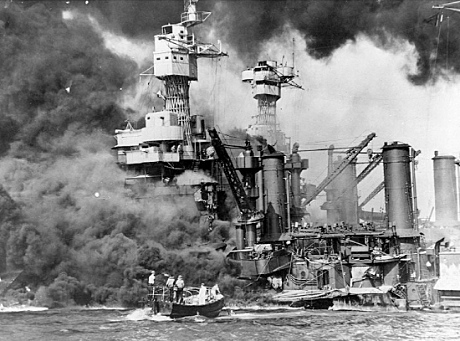
When I was growing up, I learned the standard Pearl Harbor attack story. The peaceful United States was minding its own business and staying out of the war raging in Europe when Japan suddenly attacked Pearl Harbor without any provocation. The Japanese were motivated simply by imperialist plans for conquest, we were assured.
I loved military history back then, and the war in the Pacific during World War II was my favorite. (If you ever want me to bore you with a detailed account of the Battle of Midway, I’ll be happy to do so, because it’s my favorite battle.) I have tremendous admiration for the people who fought that war and who sacrificed greatly in order to win it. Unfortunately, I can’t say the same thing about the political leaders whose actions led to the war.
When I was 12, I learned Franklin Roosevelt’s rousing speech on Dec. 8, 1941, asking Congress to declare war on Japan. (I can still do large parts of it, and I’m sure it’s funny to hear me emulate FDR’s accent.) I believed that Roosevelt was a great wartime leader.
 New Star Trek film is reminder that adults aren’t running Hollywood
 ‘Can you trust this administration?’ No, but I don’t trust any president
 Be afraid, friends: Chicken Little says the sky is falling somewhere
 Goodbye, Emily (2009-2015)
 Best years of our lives? For me, teen years were start of feeling like alien
 Today’s kids learning they should fear police, not respect them
 Norman Rockwell or Norman Bates? Holidays are dysfunctional for some
 News used to be important; now it’s well-dressed entertainment
 No, they’re not just U.S. bureaucrats: They’re our ‘federal family’