
Nobody could possibly be opposed to “human rights.” The idea sounds so pure and noble. So why does the phrase make me cringe?
When I speak of rights, I tend to speak of individual rights. That’s what the classical liberal thinkers had in mind a couple of hundred of years ago when they started recognizing rights. They realized that individuals had certain rights — to be left alone to live, speak, worship and trade as they wished. Politicians attempting to implement some of those ideas — such as the founders of this country after the split from Great Britain — did imperfect jobs of implementing the ideas, even though they were really good at quoting the rhetoric of individual rights. (If they had really understood their rhetoric, slavery wouldn’t have been made part of the Constitution, for instance.)
But since the beginning of the Progressive Era, people have talked about something entirely different. Influenced by Marxist ideas of rigid class structure, they slowly evolved the idea that groups have rights. To them, rights weren’t natural things which apply equally to every human. Instead, “workers” had certain “rights” just because they were part of a social or economic group. The idea was extended to other identifiable groups — women and racial minorities to start — and then kept expanding.
 God may be working on what we need long before we can see it
 My books are time machines that tell you where (and who) I’ve been
 We fill life with noise because silence forces us to hear truth
 Internet helps blogging 9-year-old change the lousy food at her school
 ‘Conservative’ and ‘liberal’ should refer to temperament, not politics
 If you don’t feel overwhelmed, you just aren’t paying attention
 Is Paul Krugman serious or is this some kind of weird performance art?
 Regain your sanity by focusing only on things you can control
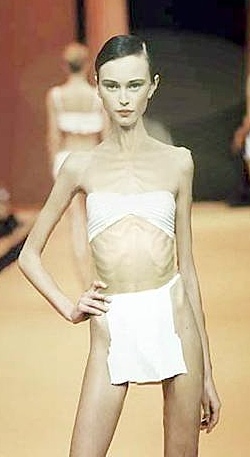 Sorry, sickly models: Normal-sized women are much more attractive