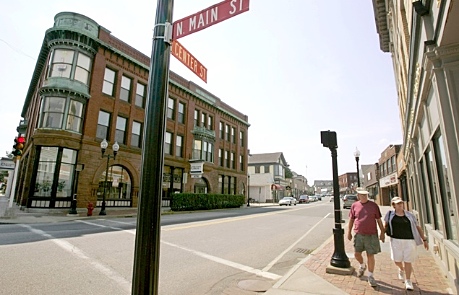
If you plan to spend any time in Middleborough, Mass., you might want to be careful if you’re the sort who enjoys slinging four-letter words around. The town’s residents voted 183-50 Monday night to enact a fine for the public use of profanity, so police will have their ears open.
In modern American society, this is typically seen as a conflict between free speech and civility. Some people believe you should be able to say anything you want without government interference, and others believe that offensive and vulgar behavior should be prohibited. Merchants in the town say some of their customers have been uncomfortable with groups of teens hanging out downtown and swearing loudly. So which side is right?
I’m an advocate of keeping government completely out of the business of censoring speech, but I’m also someone who detests profanity. (I’m one of the few people you know who you’ll never hear it from. I didn’t grow up with it and I’ve consciously avoided using it. It’s not what I want to be.) So it sounds as though these two competing values are in conflict and there’s no logical way to resolve it.
That’s sort of true. There’s no logical way to resolve it under the current system of “public” ownership of property and the rules that come with “public” space. But what if the real issue isn’t free speech vs. civility? What if the real issue is who owns property — and who should be allowed to make the rules?
 Law profs: the Constitution means whatever we say it means
 Apple’s Steve Jobs is dead
 I’m the common denominator in all of my failed relationships
 We’re in summer reruns this week
 Coming economic hardship may help me understand Aunt Bessie
 It’s wrong to silence anybody, even a nutcase like Alex Jones
 When voters insist on lies, politicians follow their incentives and lie
 In cold and dehumanized culture, many yearn to feel human again
 There’s a secret to contentment that selfish people never accept