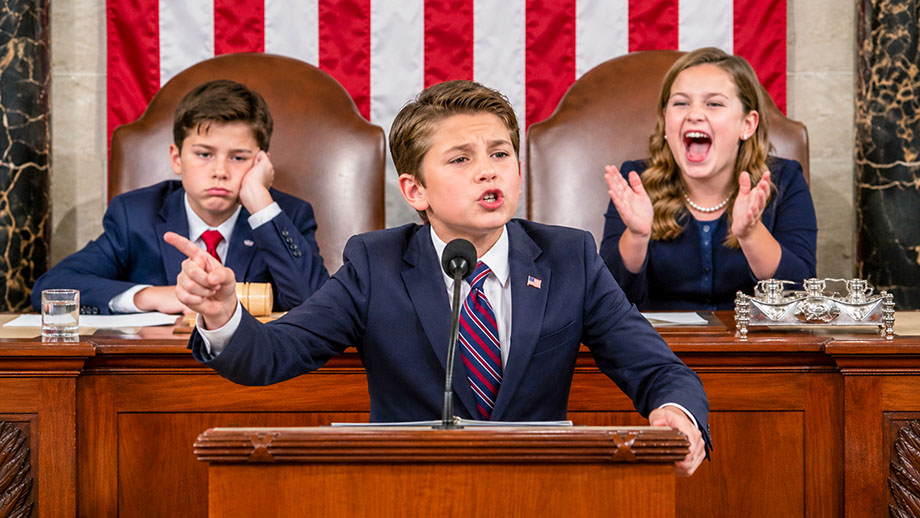
I’m trapped in a society where all the important public figures are middle schoolers.
Not actual middle schoolers, of course. Many of the loudest and most influential voices in our culture are wealthy executives, media personalities, political leaders and adults with millions of followers. But the most popular and prominent of them behave with the emotional maturity of a 12-year-old trying to dominate a cafeteria conversation.
Every disagreement becomes a playground fight. Every issue becomes tribal. Every insult demands retaliation. Every thought must be expressed immediately. Every opinion must be performed publicly. Every emotional reaction becomes content.
And the louder, more impulsive and more outrageous someone behaves, the more visibility that person receives.
That’s not happening by accident.
Years ago, media critic Neil Postman warned that television was transforming public life into entertainment. (Read Postman’s “Amusing Ourselves to Death.” Please.) Television rewarded personalities more than ideas. It rewarded emotional immediacy more than thoughtful reflection. Politics, journalism, education and religion all slowly began adapting themselves to the demands of a medium built primarily for amusement.
But television now seems almost quaint — and downright intellectual — compared to what came afterward.
Social media didn’t merely continue those trends. It automated and intensified them.
 Taking Donald Trump seriously means ‘Idiocracy’ is already here
 Kind words can make difference for stressed parents at Christmas
 Regardless of political beliefs, why does anyone watch Bill O’Reilly?
 The time is rapidly coming when I’m quitting Facebook for good
 Existential crisis makes me ask: Can I ever trust you to love me?
 When Demopublicans and Republicrats clash, you lose
 Gloria Allred wants free speech for her, but not for Rush Limbaugh
 We’re all prisoners of a culture which demands that we conform
 Does Ron Paul lead in Iowa? Does it matter for the long term if he does?