
When I was a small child, there were times when my mother didn’t get out of bed in the mornings. I didn’t know why at the time. I understand now.
My mother was diagnosed with manic depression, which we call bi-polar today. I don’t know when I learned those words. I can vaguely remember thinking about them at some point and trying to figure out what they meant. I can remember the vague sense of something being wrong. It was a vague sense of being abandoned and alone.
I suppose I was about 4 or 5 years old in the images I recall. I had two younger sisters, about 3 and about 1. My father would be gone to work and we were at home with Mother. And I felt all alone. In a lot of ways, I’ve never gotten over that feeling of being all alone and abandoned. In a way, I’ve been replaying that script over and over and over.
All of the discussion about depression in the past two days — in the wake of Robin Williams’ suicide — has been really emotional for me, because it’s brought up disturbing experiences that I’ve gone through with people who I’ve loved.
My mother was diagnosed when I was about 5. That was about the time when she started trying to leave my father. It’s also the time when she went into a mental hospital for awhile. (I seem to recall it as about six weeks, but I might be wrong.) I saw her struggle for years to be stable and to be the smart, artistic and happy person she was at her best. I wrote more about her last year.
 Most of nature follows instinct, but humans often ignore voice
 For all my life, I’ve hidden anger in order to be ‘perfect’ to others
 NOTEBOOK: The forest is burning, so quit arguing about single trees
 Christmas stands for quiet truths: love, faith, community and family
 I wanted to be Capt. James Kirk; have I become Ignatius J. Reilly?
 Thugs attacking private property aren’t anarchists; they’re vandals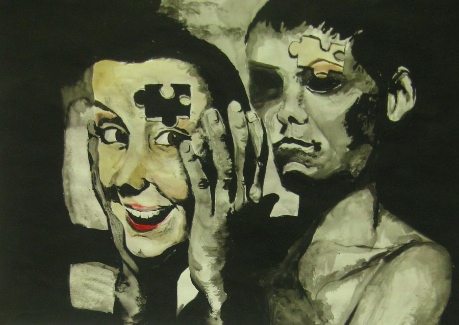
 Advocating peace requires more than hating those who start wars
 NOTEBOOK: State of the Union: ‘More of the same, re-elect me’