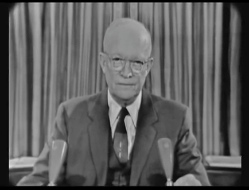
 When a five-star general warns you about the dangers of a growing military, it’s probably a good idea to listen. In President Dwight D. Eisenhower’s farewell address to the nation more than 50 years ago, he gave a stark warning. After all these years, it’s clear that few people paid attention.
We have a military that’s far too big for what’s needed to defend the United States. We have military personnel spread all over the world. We make commitments to defend other countries and base our military in them. All of this comes at a tremendous cost to the American taxpayer. What’s just as bad is that having a powerful military creates the urge to use it, so it leads us into wars that are costly in dollars and in the lives of people around the world.
If Democrats and Republicans don’t come to a budget deal, the military is going to face $600 billion in cuts over the next 10 years. (It’s important to remember that it’s not all at once. Frankly, those cuts will almost certainly never happen.)
But the leaders of the military are in a panic. For instance, on Wednesday, the Army’s chief of staff said those threatened cuts “would cause a hollowness — a significant hollowness in the force.” Military leaders have been lobbying Congress to do pretty much anything to stop those cuts. They’re united in telling us that they don’t have enough money and that they can’t spare a nickel.
At the same time the military is saying it can’t afford to cut its spending, I observed something that suggests otherwise. It’s just a small example, but it’s indicative of a culture in which spending money isn’t a big deal — because there’s always more where that came from.
 Love & Hope — Episode 4:
 Homeless honor student thrown into jail for missing too much school
 Watching kids on a Friday night reminds me of struggle to belong
 Dying Phelps’ anti-gay cult is vile and wrong, but I don’t hate him
 Are we destined to become our parents? Or can we be different?
 I finally know why I feel like a fraud when people say I’m smart
 Being treated with respect changed black teen’s racial beliefs in 1974
 It might not matter who’s right; just fix the problem and move on
 If you ever doubt that voting is a sacrament of the civic religion, remember this