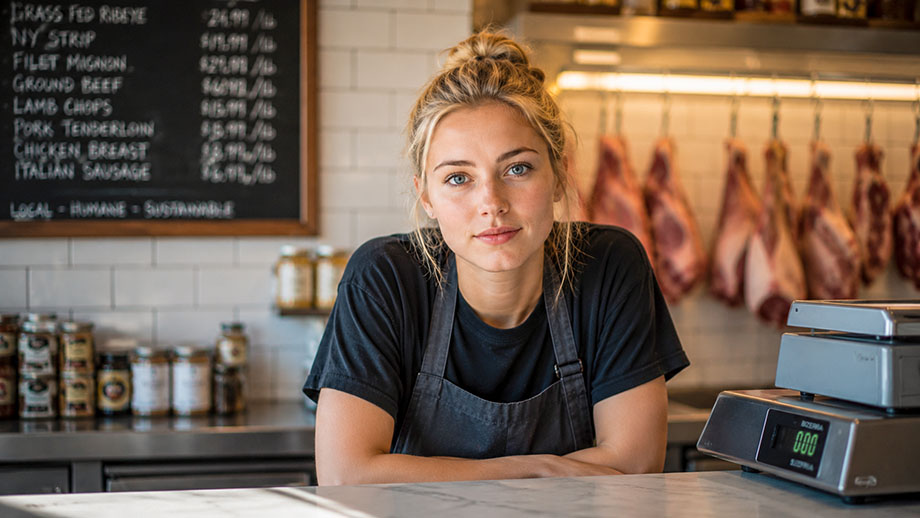
I don’t even know her name. We might have exchanged a few dozen words over the last five or six weeks. I know nothing about her. Not really.
But something about this woman’s presence — her gaze, her intensity, her confidence — makes me feel as though she sees me. She knows me. She is fully present.
This young woman works at a specialty butcher shop where I’ve started going each Friday to buy beef for weekend grilling. For her, I’m just another customer. But she has a habit — or maybe a talent — that makes her unforgettable to me.
When she looks at me, she is fully present.
I haven’t been able to stop thinking about this experience ever since I first encountered her. It’s not romantic. It’s not a feeling that I’m special to her. But everything about her presence reminds me of how unusual this behavior is today.
Most people make us feel unseen. They make us feel almost ignored, as though we don’t matter. But this woman somehow knows how to give a stranger a gift.
It’s the gift of being fully seen. She is giving the gift of her full presence.
 Missing childhood connections leave us longing for missing love
 I’m struggling to bridge the gap between my need and my reality
 Kind words can make difference for stressed parents at Christmas
 In a saner world, we would never hear a word about Jussie Smollett
 THE McELROY ZOO: Meet Dagny, the oddball who’s always hungry
 Petty politics as usual just might be Chris Christie’s bridge to obscurity
 Obama: ‘…all the choices we’ve made have been the right ones…’
 More dependence ahead now that half of households get U.S. checks
 Who’s the hero of Chick-fil-A wars? Rachel set an example for all of us